
• Home
  • About
    • Chi siamo
    • Soluzioni Tecnologiche
    • Soluzioni Finanziarie
    • Consulenza Real Estate
  • Tecnologie
    • Monitoraggio
    • Illuminazione
    • Fotovoltaico
    • Power Quality
    • Refrigerazione
    • Cogenerazione Trigenerazione
    • Mobilita Elettrica
    • Veicoli Autoguidati
    • Videosorveglianza Videoanalisi
  • Referenze
  • News
  • Contatti

Cruise ships poisoning city air

0
By redazione Posted on 11/06/2019 in Energia, ESG Environmental Social Governance, Mobilità

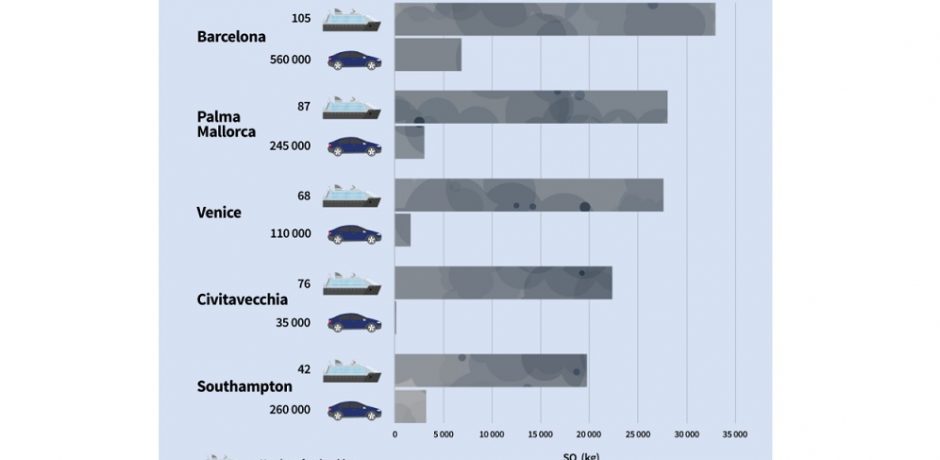
Cruise ships poisoning city air with sulphur as much as cars. Cruises docking in Barcelona are spewing out five times more SOx than the city’s 560,000 cars every year, according to the T&E study, which is based on satellite data of ship movements.
Palma Mallorca (Spain) and Venice and Civitavecchia in Italy are the next worst hit, with Southampton in England the fifth worse for SOx emissions from cruise ships. These emissions form sulphate aerosols and fine particles that harm human health and cause acid rain and acidification of the seas.

T&E said these ports and their countries are so exposed because they are major tourist destinations, where cruise ships make prolonged port calls.

T&E’s shipping policy manager, Faig Abbasov, said: ‘Luxury cruise ships are floating cities powered by some of the dirtiest fuel possible. Cities are rightly banning dirty diesel cars but they’re giving a free pass to cruise companies that spew out toxic fumes that do immeasurable harm both to those on board and on nearby shores. This is unacceptable.’

Cruise ships also belch out poisonous nitrogen oxides (NOx) equivalent to 15% of Europe’s car fleet every year. In Marseille, where 57 cruise ships called in 2017, they emitted almost as much NOx as one-quarter of the city’s 340,000 passenger cars. SOx, ultrafine particles (PM2.5) and NOx cause premature death, including from lung cancer and cardiovascular disease, and lead to childhood asthma.

Diesel cars have been the focus of the air pollution crisis in Europe’s cities, but along the coasts of countries such as Norway, Denmark, Greece, Croatia and Malta a handful of cruise ships are responsible for more NOx than the majority of their domestic car fleets.

The next European Commission will face calls to implement a zero-emission port standard for cruise ships as soon as possible, and then extend it to other ship types. T&E also recommends extending low emission control areas (ECAs), currently in place only in the North and Baltic Seas and English Channel, to the rest of the European seas. Furthermore, the report recommends turning low emissions control areas into zero emission control areas to equally address air pollution and GHG emissions.

T&E said the new global standard for low-sulphur fuel, to be implemented from 2020, is welcome but won’t bring an improvement in ports as high-sulphur fuel is already banned there for cruise ships.

Faig Abbasov concluded: ‘There are enough mature technologies to clean up cruise ships. Shore-side electricity can help cut in-port emissions, batteries are a solution for shorter distances and hydrogen technology can power even the biggest cruise ships. The cruise sector are apparently not willing to make the shift voluntarily, so we need governments to step in and mandate zero emission standards.’

www.transportenvironment.org

Previous Article

High performance buildings

10/06/2019
Next Article

Traghetto ibrido Lago Maggiore

18/06/2019

Articoli recenti

  • Aggiornamento norma ISO 9001-2026
  • Parcheggio “spugna” fotovoltaico di SmartEfficiency
  • It’s All Energy Efficiency 2026
  • Convegno Nazionale AIM 80 anni
  • IPPR e COREPLA certificano processi riciclo plastiche

Archivi

  • Settembre 2026
  • Ottobre 2025
  • Marzo 2025
  • Febbraio 2025
  • Gennaio 2025
  • Dicembre 2024
  • Novembre 2024
  • Ottobre 2024
  • Settembre 2024
  • Agosto 2024
  • Luglio 2024
  • Giugno 2024
  • Maggio 2024
  • Aprile 2024
  • Marzo 2024
  • Febbraio 2024
  • Gennaio 2024
  • Dicembre 2023
  • Novembre 2023
  • Ottobre 2023
  • Settembre 2023
  • Agosto 2023
  • Luglio 2023
  • Giugno 2023
  • Maggio 2023
  • Aprile 2023
  • Marzo 2023
  • Febbraio 2023
  • Gennaio 2023
  • Dicembre 2022
  • Novembre 2022
  • Ottobre 2022
  • Settembre 2022
  • Agosto 2022
  • Luglio 2022
  • Giugno 2022
  • Maggio 2022
  • Aprile 2022
  • Marzo 2022
  • Febbraio 2022
  • Gennaio 2022
  • Dicembre 2021
  • Novembre 2021
  • Ottobre 2021
  • Settembre 2021
  • Agosto 2021
  • Luglio 2021
  • Giugno 2021
  • Maggio 2021
  • Aprile 2021
  • Marzo 2021
  • Febbraio 2021
  • Gennaio 2021
  • Dicembre 2020
  • Novembre 2020
  • Ottobre 2020
  • Settembre 2020
  • Agosto 2020
  • Luglio 2020
  • Giugno 2020
  • Maggio 2020
  • Aprile 2020
  • Marzo 2020
  • Febbraio 2020
  • Gennaio 2020
  • Dicembre 2019
  • Novembre 2019
  • Ottobre 2019
  • Settembre 2019
  • Agosto 2019
  • Luglio 2019
  • Giugno 2019
  • Aprile 2019
  • Marzo 2019
  • Febbraio 2019
  • Gennaio 2019
  • Dicembre 2018
  • Novembre 2018
  • Ottobre 2018
  • Settembre 2018
  • Luglio 2018
  • Giugno 2018
  • Maggio 2018
  • Aprile 2018
  • Marzo 2018
  • Febbraio 2018
  • Gennaio 2018
  • Dicembre 2017
  • Novembre 2017
  • Ottobre 2017
  • Settembre 2017
  • Agosto 2017
  • Luglio 2017
  • Giugno 2017
  • Maggio 2017
  • Aprile 2017
  • Marzo 2017
  • Febbraio 2017
  • Gennaio 2017

Categorie

  • Circular Economy
  • Energia
  • ESG Environmental Social Governance
  • Eventi – Fiere
  • Finanza – Istituzioni
  • Food – Retail
  • Media Partner
  • Mobilità
  • Operations
  • Real Estate – City
  • Referenze
  • Tecnologie
© SmartEfficiency.eu - Created by ALEX & Co Milano