
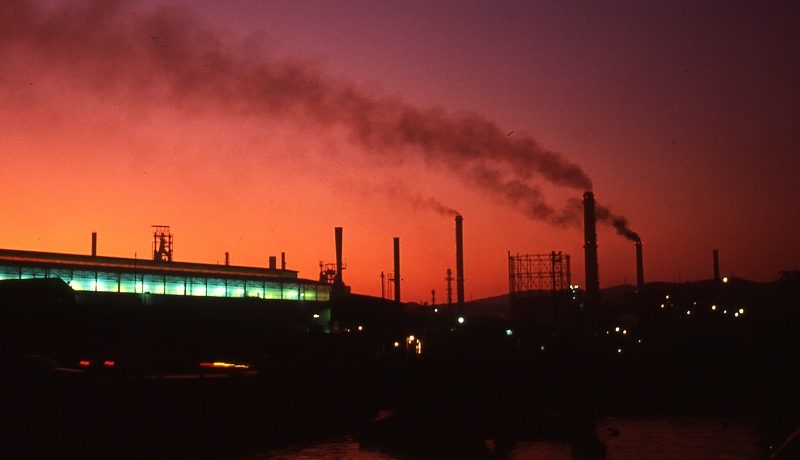
EU industrial pollution law revision essential to cut greenhouse gases and pollutants. The Industrial Emissions Directive (IED) currently excludes limits on carbon dioxide and other greenhouse gas emissions (GHGs), making it unfit to support the EU’s moves to address climate change, according to legal, environmental and health experts.
As the directive determines the allowable emissions levels of over 50,000 industrial facilities – about half of the EU’s GHG emissions – the group is launching a petition demanding the IED be revised to include GHGs and to limit air, water and soil pollution much more strictly, to ensure that the commitments under the European Green Deal become reality.
The news comes during the European Commission’s public consultation on the IED
Christian Schaible, Policy Manager for Industrial Production at the European Environmental Bureau (EEB) said: “The whole point of the IED is to protect us and our environment from the negative impacts of industrial activities. If the Commission is serious about their zero pollution, circular and carbon neutrality goals, they must redesign its scope, rethink how standards are set, and ensure greater transparency.”
Doreen Fedrigo, Industrial Transformation Policy Coordinator at CAN Europe, said: “EU leaders last year agreed to more ambitious greenhouse gas emission reductions by 2030. Now is the time to implement this higher climate goal, across all sectors. The IED is a key tool to drive drastic cuts in greenhouse gas and toxic emissions in the industry sector. Including limits on greenhouse gas emissions alongside stricter limits on other industrial emissions will be needed for the EU to honour its commitments under the Paris Climate Agreement.”
The NGOs also stress that the IED does not currently address a variety of serious problems related to the air, water and soil pollution. Large-scale industrial activities are one of the main contributors to air pollution, which leads to 412,000 premature deaths in Europe every year, meaning a stricter regulation on all industrial emissions can no longer be avoided.
Vlatka Matkovic, Senior Health and Energy Officer at the Health and Environment Alliance (HEAL) said: “Zero pollution and a health-protective approach need to be at the heart of the industrial emissions law, to urgently and significantly cut pollution, especially from coal power plants. The revision of the Industrial Emissions Directive is a not-to-be-missed opportunity for preventing disease and premature deaths, and for delivering on the EU’s climate ambition.”
The current IED does not lead to a zero pollution environment or circular economy, nor does it ensure proper public participation rights and access to information. The NGOs point out various cases of these failures throughout the EU Member States.
Laura Otýpková, lawyer from Frank Bold said: “The current IED is full of loopholes and flexibilities which allow industrial operators to avoid complying with strict rules. At the same time, the public is often excluded from proper participation and denied access to information on emissions. In the end, the IED seems like a token gesture – its revision is a perfect opportunity to make it the powerful piece of legislation it could be.”
The NGOs have launched a petition to urge the European Commission to transform the Industrial Emission Directive (IED).
The Industrial Emissions Directive came into force in January 2011 and was transposed in the EU Member States by January 2013.
It regulates dangerous pollutants from industry, including dust, nitrogen oxides, sulphur dioxide and heavy metals. Industry – which includes factories, power plants, intensive livestock farming and refineries – is the source of about a half of the European Union’s greenhouse gas emissions and 75% of hazardous waste production. Large-scale industrial activities are one of the main contributors to air pollution which leads to 412,000 premature deaths in Europe every year. At the same time, according to industry reports, these facilities release about 4,600 tonnes of heavy metals every year into the air, water and soil, including ecotoxic arsenic and neurotoxic lead and mercury. Their main source is coal combustion.
In a recent evaluation, the European Commission concluded that the IED is not working on several levels. Most importantly, the law is not helping to decarbonize industry. What we see in several countries is that the IED has allowed multiple flexibilities and has not lowered emissions, especially from coal plants, as fast as it could have. The fitness check showed that the IED has rarely helped tackle transboundary pollution and has not enabled sufficient public participation or access to information. This means that industrial operators are being allowed to pollute at dangerous levels while people at home and abroad remain powerless to do anything about it.
The European Commission has started preparing an update to the Directive, which should include new rules for industrial pollution. The public can now have their say to influence the future legislation, and secure the protection of climate and health. The consultation will be open for anyone to participate until 23 March. The European Commission should prepare the final proposal by the end of 2021, and it will then be voted on by the European Parliament.
The European Environmental Bureau (EEB) is Europe’s largest network of environmental citizens’ organisations, standing for environmental justice, sustainable development and participatory democracy. Our experts work on climate change, biodiversity, circular economy, air, water, soil, chemical pollution, as well as policies on industry, energy, agriculture, product design and waste prevention. We are also active on overarching issues as sustainable development, good governance, participatory democracy and the rule of law in Europe and beyond.
We have over 160 members in over 35 countries.
ph. © Enrico Rainero