
Category: Real Estate – City
Green Logistics Expo, il Salone Internazionale dedicato alla logistica sostenibile. BYinnovation e SmartEfficiency Media Partner della prima edizione della nuova manifestazione, promossa da Interporto Padova e Fiera di Padova che si propone di essere l’appuntamento italiano di riferimento per tutto il settore, è in calendario nei rinnovati padiglioni della Fiera di Padova dal 7 al 9 marzo 2018.
Tre giorni che metteranno al centro tutti i temi più avanzati della catena logistica, a partire naturalmente dalla sostenibilità, fino alle opportunità offerte dalle nuove tecnologie.
E’ in corso una rivoluzione: saranno i droni a consegnare a domicilio i nostri acquisti?
Le stampanti 3D annulleranno la necessità di trasportare merci e beni?
Green Logistics Expo proverà a dare una risposta a queste domande suggestive, ma affronterà anche temi forse meno affascinanti ma certamente molto concreti per disegnare una logistica efficiente e sostenibile che permetta al nostro Paese di risparmiare quei 13 miliardi di euro che rappresentano oggi un extracosto nella movimentazione delle merci rispetto alla media europea.
Quali saranno le fonti di energia con cui alimenteremo i nostri veicoli?
Gas naturale, Elettricità o addirittura Idrogeno?
Come porteremo le merci sui treni per tagliare le emissioni di CO2 e diminuire la congestione stradale?
Quali saranno le esigenze delle nuova logistica industriale, sempre più automatizzata, alle quali dovranno rispondere anche gli operatori del real estate?
Come e dove saranno i nuovi magazzini?
Green Logistics Expo affronta il settore con una visione sistemica e si propone come luogo privilegiato di confronto ravvicinato, sia per il business che per le strategie di scenario a tutti gli operatori della logistica e alle imprese manifatturiere che qui possono trovare tutte le opportunità per ottimizzare la propria supply chain.
Green Logistics Expo si sviluppa attorno a quattro macro aree individuate come strategiche per costruire la logistica del futuro:
– Intermodalità,
– E-Commerce,
– City&Logstics,
– Logistica Industriale e Real Estate.
Ognuna affianca alla parte espositiva approfondimenti e focus attraverso convegni e workshop specialistici.
In mostra quindi operatori dei mondi del trasporto ferroviario, dei porti e degli interporti, terminalisti, aeroporti cargo e aziende produttrici di mezzi e sistemi collegati, Piattaforme e Centri logistici, Distretti industriali e Fondi di investimento, Costruttori specializzati e Green Buildings, Provider Logistici, Corrieri tradizionali ed espresso, spedizionieri, autotrasportatori e Grande Distribuzione Organizzata, Gestori di Servizi di City Logistics, Utility e Trasporto Urbano, Pubblica Amministrazione e servizi collegati, Ricerca e Mondo Universitario.
L’obiettivo per tutti gli attori della catena logistica è coniugare efficenza e sostenibilità, sia economica che ambientale. Un traguardo che è anche al centro delle politiche governative, disegnate Piano Strategico Nazionale per la Portualità e la Logistica che indica quattro obiettivi: Accessibilità ai territori, all’Europa e al Mediterraneo, Mobilità sostenibile e sicura, Qualità della vita e competitività delle aree urbane, Sostegno alle politiche industriali e di filiera.
Viviamo quindo un momento che esprime sia una grande domanda di logistica che molte domande alla logistica.
La città di Padova e Green Logistics Expo hanno l’ambizione di rispondere ad entrambe, grazie da un lato alla consolidata esperienza nel settore rappresentata dal know how e dai successi di Interporto Padova Spa, dall’altro grazie alla storica attenzione dedicata a questi temi da Fiera di Padova.
Ricordiamo infatti che la Fiera di Padova ha ideato e realizzato in passato Tramag e Sep, manifestazioni che grazie anche alla collaborazione con l’Università di Padova, che prosegue ancora oggi, sono state di riferimento per il settore.
Inoltre Fiera di Padova ha sviluppato, a partire da questa manifestazione, un format innovativo più sostenibile da un punto di vista economico e ambientale, che permette una riduzione dei costi logistici di allestimento e una minore produzione di rifiuti a fine manifestazione, confermando così la propria volontà per impegnarsi in prima persona su questi temi.
«Interporto Padova ha oltre 40 anni di storia – sottolinea il Presidente Sergio Giordani – e dalla sua nascita ha perseguito tre obiettivi: efficienza, innovazione e sostenibilità. Fino ad oggi ci siamo riusciti: siamo uno dei principali interporti italiani e i nostri bilanci si chiudono con utili per i nostri soci; abbiamo un terminal intermodale dal quale transitano ogni anno oltre 5500 treni merci e che movimenta oltre 270.000 container.
Praticamente togliamo dalle strade 270.000 camion, con gli immaginabili benefici per tutta la collettività. Abbiamo creato Cityporto, certamente il miglior servizio di distribuzione urbana delle merci in Italia e uno dei migliori al mondo. Abbiamo uno dei più grandi impianti fotovoltaici su tetto d’Italia. E proprio in occasione di Green Logistics Expo inaugureremo quattro nuove gru elettriche a portale nel nostro Terminal Intermodale. E’ la stessa legge istitutiva che riconosce agli interporti un ruolo di servizio alla comunità: ci è sembrato quindi naturale, oltre che una sfida che ci entusiasma, mettere il nostro know how a servizio di Green Logistics Expo. E’ il nostro modo per dire grazie a questa città, che ci ha sempre sostenuto convintamente, e per contribuire ad un Paese migliore anche nel settore dei trasporti e della logistica. In questa avventura non potevamo trovare un partner migliore della Fiera di Padova e Geo Spa ».
«Fiera di Padova, come Interporto Padova ha un grande passato – commenta Andrea Olivi, Presidente di Geo Spa la società che gestisce le attività di Padova Fiere – ma ha soprattutto un grande futuro.
Green Logistics Expo è uno dei tasselli di un articolato progetto che ruota attorno ad una concetto semplice: il modo tradizionale di fare fiere è superato. Non più semplici luoghi dove esporre beni e servizi, ma laboratorio permanente che aiuti le aziende a individuare nuovi business, nuovi mercati, mantenendo però solidi legami con il proprio territorio e la propria storia. Per questo vogliamo una Fiera che dialoga sempre di più con la città e con essa -come è accaduto con Interporto Padova- elabora idee che pongano il nostro territorio all’attenzione nazionale ed internazionale. La logistica è una funzione chiave per ogni tipologia di azienda e siamo quindi orgogliosi di poter proporre al mondo della manifattura, ma non solo, una appuntamento altamente qualificato che in Italia fino ad oggi mancava».
Green Logistic Expo è quindi un evento fieristico, Innovativo, Internazionale, Istruttivo, Divulgativo e Sistemico che propone un incontro B2B a tutto il mondo della logistica del trasporto e dei servizi collegati.
Una fiera innovativa con i leader dell’E-Commerce, dell’Intermodalità, della Logistica Industriale e dei servizi per la Città smart del futuro.

CommONEnergy for shopping centres renovation. CommONEnergy, a research project funded by the European Union, developed these past 4 years new strategies and solutions to retrofit existing shopping centres to reduce consumptions, increase energy efficiency and comfort.
The project, coming soon to an end, presented its landmark publication, Guidelines on how to approach the energy-efficient renovation of shopping centres and awarded innovative shopping centres during a full day event in Brussels.
A shopping centre is a building, or a complex of buildings, designed and built to contain many interconnected activities in different areas.
Shopping centres have special peculiarities as they vary in their functions, typologies, forms and size.
Within the retail sector, they are of particular interest because of their structural complexity and multistakeholders’ decisional process, their high energy savings and carbon emissions reduction potential, as well as their importance and influence in shopping tendencies and lifestyle.
In order to efficiently exploit a shopping centre energy potential, every retrofitting should involve a careful analysis of the building peculiarities in all fields, from the economic features until the socio-cultural ones. The use of building energy simulations can help evaluate the balance between gains and losses and the energy uses and test design options and solution-sets.
The CommONEnergy guidelines are a step-by-step handbook for the renovation of shopping centres, resulting from the four years of research of the project.
Starting from an analysis of shopping centres’ features and drivers for their renovation, CommONEnergy guidelines go through processes, modelling and tools developed by the project, focusing in particular on the several technology measures enabling the aggregation in cost-effective solution-sets, like greenery integration, multifunctional coating, demand-response approach for refrigeration, and more.
The tools described by the guidelines include the Economic Assessment Tool and the Integrated Design Process Library.
“These guidelines were conceived to be a source of inspiration for facility managers, architects, owners, investors and designers” says CommONEnergy Scientific Coordinator Roberto Lollini, describing the aim of the handbook, “and provide steps to follow from the early stages of renovation, with technology solutions and effective methodological approaches.”
These guidelines can be key to launch a domino effect for the energy transition of shopping centres and similar buildings in the EU, such as airports or train stations. The full day event included a training workshop in the morning, presenting all project tools, from continuous commissioning to social and environmental assessment or IDP library, and a final conference in the afternoon.
An award ceremony, the Sustainable Building Challenge, closed the event, and a year-long process of identifying and rewarding the best sustainable and energy-efficient European shopping centres.
The winning shopping centres were:
– IKVA Shopping Centre – Sopron – Hungary, in the “Super Malls” Category;
– CARREFOUR Hypermarket – Nichelino – Torino – Italy, in the “Hyper Malls” Category;
– CENTROSARCA Shopping Center – Sesto San Giovanni – Milano – Italy, in the “Mega Malls” Category.
The three projects adopted sustainability principles in refurbishment in a varied and innovative way using different assessment schemes (Breeam, Leed and Protocollo Itaca). These centres demonstrate that transforming shopping centres, icons of a consumerist society, into lighthouses of energy efficient architectures and systems is possible.
The SBChallenge competition was managed by iiSBE, the International Initiative for a Sustainable Built Environment, through its European chapter iiSBE Italia.
About CommONEnergy
A research project funded by the European Union, its aim is to develop new strategies and solutions to retrofit existing shopping centres, in order to reduce consumptions, increase energy efficiency and comfort. The project involves 23 partners in Europe from industry, research and the retail sectors, including three shopping centres (in Italy, Spain and Norway) as demo cases to implement the innovative solutions and technologies developed; as well as a network of eight further commercial centres in 5 European countries used as real examples for the identification of inefficiencies, and for the virtual simulation of the systemic solutions developed.

RICS – IFMA landmark facilities management collaboration. RICS and the International Facility Management Association (IFMA) are pleased to announce a landmark collaboration that promises to transform the US$1 trillion global facility management (FM) industry.
Strategic Facilities Management
By joining strategic resources, they will create an unprecedented level of industry support to meet growing demands from the 25 million FM practitioners around the world, as well as launch a single and compelling career pathway into the profession.
Harnessing the power of strategic FM services
“Over recent years, the FM industry has advanced in stature and evolved into an increasingly strategic discipline. IFMA and RICS research has empirically demonstrated the tangible advantages of effective facility management, ranging from improved productivity and cost savings to energy efficiency and employee well-being. As established leaders offering extensive resources to practitioners across the built environment, IFMA and RICS have come together in collaboration to further develop and professionalise the field of facility management.
Even as the industry has attained increased status and prominence, the global professional community, which has pioneered much of this advance, has suffered through fragmented support, according to an RICS survey of professionals across six continents. The RICS and IFMA collaboration will seek to address this by providing strong, global leadership and the tools needed to harness the power of strategic FM services.
As global thought leaders dedicated to the professionals who support the built environment, IFMA and RICS identified a unique opportunity to team up and fortify existing resources to enhance the outstanding level of service they already provide to professionals and built environment industry. The framework of this collaboration will create a less fragmented, more inclusive and highly regarded global facility management community.”
IFMA President and CEO Tony Keane
“The collaboration will also seek to address the current shortage of FM professionals in the workforce. Whilst there is growing market demand for facility management skills around the world, currently there is a shortage of professionally qualified practitioners equipped to deliver this service. Our collaboration will establish a clearly defined, single-career pathway, which will see FM practitioners acquire the leading skills they need to become recognised as preeminent professionals.”
RICS CEO Sean Tompkins
The goals of the IFMA-RICS collaboration include:
– Advancing global knowledge sharing and cohesion within the FM community.
– Expanding the existing informational and networking infrastructure for members of both organisations.
– Unifying the FM career path through both IFMA credentials and RICS qualifications.
– Incorporating FM trends and best practices into a more comprehensive picture of the built environment.
– Encouraging graduates and young professionals to select careers in FM.
– Asserting the strategic value of FM to business in order to further elevate the profession.
The RICS and IFMA collaboration will be shaped over time, but initially will leverage both organisations’ existing resources in education, research, conferences and events, and external relations. They will also work together to align credentials and qualifications to shape a single FM career path with demonstrable professional status which is recognised and respected globally.
RICS professionals who have qualified in FM will automatically receive IFMA member benefits. In turn, IFMA members and credential holders will be able to attain RICS professional qualifications and benefit from RICS’ international standards and global professional network.
International Facility Management Association (IFMA)
IFMA is the world’s largest and most widely recognised international association for facility management professionals, supporting 24,000 members in 105 countries. The association’s members, represented in 134 chapters and 17 councils worldwide, manage more than 37 billion square feet of property and annually purchase more than US$100 billion in products and services.
Formed in 1980, IFMA certifies professionals in facility management, conducts research, provides educational programs and produces World Workplace, the world’s largest facility management conference and exposition.
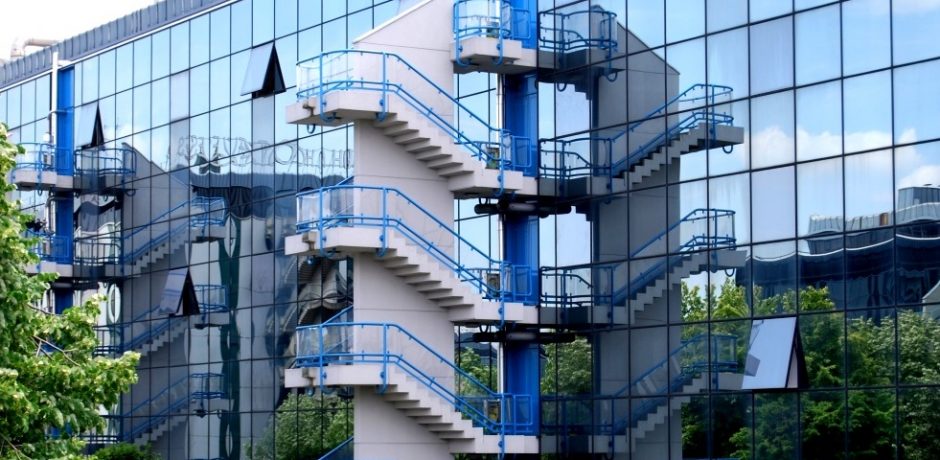
Global office forecast: is overbuilding? Across the globe, an unprecedented office building boom is underway with more than 700 million square feet (MSF) of space under construction that will deliver between now and the end of 2019, Cushman & Wakefield’s Global Office Forecast reports.
That’s the equivalent of recreating five cities worth of office inventory – Washington, DC, Dallas, London, Singapore and Shanghai – over the next three years.
The report details economic drivers, supply and demand forecasts and prospects for rent growth in more than 100 cities around the world.
Although demand, as well as job growth, will remain healthy through 2019, totaling approximately 520 MSF, it will fall far short of supply, which will cause vacancy to rise in most cities around the world. From that perspective, the world is overbuilding.
Or, not.
It also has been abundantly clear throughout this global expansion that most occupiers generally favor new, high-quality office space over older, Class B and C product. In the U.S., for example, newly built high-quality space has accounted for 65% of all office absorption since 2012. More often than not, developers have been rewarded throughout this cycle for delivering prime product, even in markets where vacancy is elevated. Additionally, the combination of an accelerating global economy with low interest rates is a recipe for healthy office-demand conditions.
“Developers are certainly placing some big bets on new product, but the bulk of it is concentrated in the major global cities, which is precisely where the greatest appetite is for these shiny new buildings,” said Kevin Thorpe, Cushman & Wakefield Global Chief Economist. “I’m less concerned about the new space leasing up, because in a sense, that is supply rushing to meet demand. It’s giving tenants exactly what they are asking for. I’m more concerned about what this wave of supply means for lower-grade product, which I suspect will have a difficult time competing.”
The development boom will be led by Asia Pacific, particularly Greater China. In fact, nearly 60% of the world’s new construction will be concentrated in the Asia Pacific region. Within the region, new supply is concentrated in a handful of markets: Beijing, Shenzhen, Shanghai, Manila and Bangalore. Indeed, those five markets account for 55% of construction taking place in Asia Pacific and over one-third of construction worldwide. Much like the supply side, the demand side of the equation is strongest in Asia Pacific. Beijing will have the distinction of leading the world in both supply and demand growth.
The Americas region is also in the midst of a robust construction cycle, peaking in 2017 and tapering offer somewhat in 2018 and 2019. . Still, the U.S., Canada and Latin America will all build more space than they will absorb over the next few years. Again, it varies greatly from one city to the next, and the bulk of new space is concentrated in the largest cities, many of which arguably need it the most.
The development pipeline also is ramping up throughout Europe, but not nearly to the same degree. Some European cities, such as Paris, Vienna, London and Brussels, will hit a cyclical high in terms of new construction over the next two years, while Madrid will show steady growth amidst global deceleration of rental-rate growth. Then again, those same cities report vacancy rates that are lower than pre-recession levels.
“Broadly speaking, supply and demand seem to be the most balanced in Europe relative to the other global regions,” Thorpe said.
Europe Key Facts
Berlin and Munich will have the second- and third-lowest vacancy rates in the world by 2019, at 3.1% and 3.3%, respectively.
Over the next three years, the number of development completions is expected to increase significantly in Istanbul, London, Brussels, Vienna and Dublin. In fact, over 2017-18, Istanbul, Copenhagen and the City of London will see the highest level of completions so far this cycle.
On the other end of the spectrum, in Stockholm, Amsterdam and Helsinki, less than 2.5% of stock is expected to be completed in the near term, offering stronger potential rent growth and lower vacancy.
Budapest, Dublin, Copenhagen and Madrid expect to have the strongest growth rates in the office-reliant information and communications sectors.
Brexit-related uncertainty is expected to inhibit office-based job growth, but vacancy in London is still expected to remain tight, under 5%.
APAC Key Facts
In APAC, 2017 will be a record construction year, with nearly 150 MSF of new office projects slated for completion across 25 major cities.
Beijing will have the distinction of leading the world in both supply and demand growth over the next three years.
Expect a shift towards tenant-favorable conditions in most APAC markets. However, the growing obsolescence of office stock in gateway cities like Singapore, Melbourne and Tokyo means new projects remain attractive to tenants looking for efficiency and modern facilities.
Sydney will have the lowest vacancy rate in the world by 2019, at 2.4%
In the past 12 months through May 2017, the banking and financial services sector was the biggest driver of leasing in APAC. Co-working, meanwhile, continues to gain traction in the region, accounting for 10% of leasing activity over the last 12 months.
Shenzhen and Guangzhou expect impressive job growth due to the rise of fin-tech and eCommerce.
In India, the introduction of the long-awaited goods and services tax (GST), along with other reforms, will continue to enhance the investment climate. Hyderabad will lead the world in office rent growth over the next 3 years.
Americas Key Facts
The top five markets for office-using job growth in the U.S. over the next three years will be New York, Dallas, Los Angeles, Atlanta and Chicago. Washington, DC Metro and Phoenix also make notable moves upwards in the job-growth rankings.
The Latin America markets of Rio de Janeiro and Sao Paulo make the most dramatic move up in the job growth rankings as the region exits recession.
The top five lowest-vacancy markets in the Americas by 2019 are mostly Canadian markets: Toronto (3.9%), Vancouver (6.3%), Orlando (7.2%), Ottawa (7.3%) and Winnipeg (7.4%).
In the U.S., it is mostly secondary markets that will lead the country in rent growth over the next three years, led by: Seattle (+6.8%), Raleigh-Durham (+4.8%), Oakland (+4.2%), and Portland, OR (+4.2%).
Cushman & Wakefield is a leading global real estate services firm that helps clients transform the way people work, shop, and live. Our 45,000 employees in more than 70 countries help occupiers and investors optimize the value of their real estate by combining our global perspective and deep local knowledge with an impressive platform of real estate solutions. Cushman & Wakefield is among the largest commercial real estate services firms with revenue of $6 billion across core services of agency leasing, asset services, capital markets, facility services (C&W Services), global occupier services, investment & asset management (DTZ Investors), project & development services, tenant representation, and valuation & advisory. 2017 marks the 100-year anniversary of the Cushman & Wakefield brand. 100 years of taking our clients’ ideas and putting them into action.
Individual Building Renovation Roadmaps as real drivers for deep energy renovation: iBROAD H2020 project kicks-off.
iBROAD is a new project funded by the Horizon 2020 European programme, aimed at exploring, designing, developing and demonstrating the concept of individual Building Renovation Roadmaps. With 12 partners from 9 countries, it kicked off on 3-4 July 2017 in the Athens metropolitan area, Greece. With the innovative approach proposed, the project aims to become a real driver for deep renovation.
Representing an evolution of the Energy Performance Certificates (EPCs) and energy audit systems, these building renovation roadmaps will serve as a tool outlining a customised renovation plan with a long-term horizon for deep step-by-step renovation of individual buildings (iBROAD-Plan), combined with a repository of building-related information (logbook, iBROAD-Log).
iBROAD will be a consumer-tailored project as it will strongly support building owners in step-by-step deep renovations, removing barriers and lock-in effects. Energy auditors and end-users will be empowered with knowledge and experience of deep renovation in individual buildings. Public authorities will be provided with real-life studies and analysis supporting deep renovation, both for individual buildings and as a long-term national strategy, thus increasing the renovation rate and depth across the EU.
With a target focus on residential buildings, the project will analyse and build upon relevant examples from Germany, France and Belgium (Flanders), to identify the elements, develop an integrated concept, and produce modular tools, suitable for differing national conditions.
The iBROAD innovative concept and tools will be tested in Bulgaria, Poland, Portugal and Germany, supported by auditor training, and providing feedback as input to the feasibility and replicability analysis of the model to other building typologies and EU Member States. Stakeholder engagement will be sought from the start at the national (Austria, Belgium, Bulgaria, Germany, Greece, Poland, Portugal, Romania and Sweden) and EU level, for maximum impact.
The project is led by Sympraxis Team (Greece) and the Buildings Performance Institute Europe (BPIE, Belgium), with a consortium of partners including: ifeu – Institute for Energy and Environmental Research (Germany), TU Wien – Technical University of Vienna (Austria), INZEB – Institute of Zero Energy Buildings (Greece), BPAC – Blue Planet Academy & Consulting (Belgium), Eneffect Center for Energy Efficiency (Bulgaria), ADENE Energy Agency (Portugal), VEA – Flemish Energy Agency (Belgium), KAPE – Polish National Energy Conservation Agency (Poland), PHC – Passive House Center (Sweden), INCD URBAN-INCERC – National Institute for Research and Development in Construction, Urban Planning and Sustainable Spatial Development (Romania).
While the project website is being designed, follow the project on Twitter at: @iBROAD_project
The iBROAD project has received funding from the European Union’s Horizon 2020 research and innovation programme under grant agreement N. 754045.

Green Logistic Expo, Fiera di Padova. World Capital Group sarà partner e referente scientifico per la parte immobiliare dell’evento Green Logistics Expo, in programma alla Fiera di Padova, dal 7 al 9 marzo 2018, con il patrocinio di Assologistica.
Al Real Estate degli immobili logistici e industriali, il Salone Internazionale della Logistica Sostenibile, promosso dalla Fiera di Padova e dall’Interporto di Padova, dedicherà un intero padiglione di 3.000 MQ, che sarà denominato:
Logistic REsolution
Il padiglione dell’immobiliare logistico
“Quando siamo stati contattati dall’organizzazione dell’evento, – dichiara Marco Clerici, Managing Director di World Capital Real Estate – interessata a dare spazio al Real Estate per la logistica, abbiamo subito sposato l’idea mettendo in comune la nostra consolidata esperienza nel settore.
Così, insieme abbiamo costruito un’idea di padiglione che contribuirà a creare un percorso “reale/virtuale” nella filiera dell’immobiliare logistico la cui denominazione Logistic REsolution è la sua naturale espressione. Siamo veramente orgogliosi – conclude Marco Clerici – di essere stati coinvolti in un progetto così importante; raccogliamo dunque la sfida e vi aspettiamo tutti all’evento.”
Green Logistic Expo porta in Italia, per la prima volta, una fiera B2B con i leader dell’intermodalità ferroviaria, del trasporto merci, della logistica per l’industria e della portualità, dell’E-Commerce e della governance urbana. Tre giorni a supporto dell’economia, crescita e qualità di vita, nonché piazza di incontro tra efficienza e ambiente. Innovazione tecnologica e opportunità di business si intrecceranno con i nuovi scenari della logistica sostenibile, mentre la supply chain del futuro sarà presentata al mondo delle istituzioni e dell’impresa.
“Crediamo che il padiglione Logistic REsolution – dichiara Luca Griggio, Amministratore Delegato di Geo Spa, la società che gestisce le attività delle Fiera di Padova – possa dare quel valore aggiunto ad un evento già unico ed innovativo nel suo genere. La semplice considerazione che qualsiasi attività si svolga in spazi “reali” ci ha spinti a dare una giusta dimensione alla parte immobiliare della logistica coinvolgendo World Capital in quest’avventura. Sono state identificate tre macro aree – prosegue Luca Griggio – che costituiranno il filo conduttore del padiglione.
All’interno di tali aree troveranno spazio espositori afferenti alle categorie Servizi, Strutturale ed Impiantistica che già oggi vantano l’adesione e l’interesse di molti operatori.”
Il padiglione Logistic REsolution, ospiterà società afferenti ai seguenti settori:
SERVIZI
– Progettisti
– Imprese di costruzione
– Sviluppatori
STRUTTURALE
– Prefabbricati
– Coperture
– Serramenti
– Pavimentazioni
– Scaffali
IMPIANTISTICA
– Antincendio
– Elettrico
– Illuminazione
– Ascensori
– Allarmi e videosorveglianza
– Domotica
– Fotovoltaico
– Energie rinnovabili
Case ed Edifici in Legno: un’abitazione su quattordici è in legno. Presentato il scondo Rapporto Case ed Edifici in Legno del Centro Studi Federlegno Arredo Eventi.
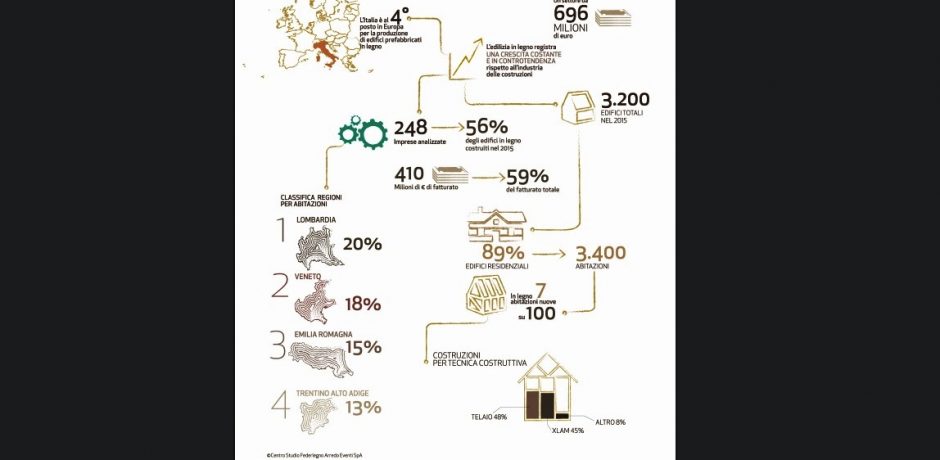
Oltre 3.400 nuove abitazioni realizzate in legno nel corso del 2015, pari al 7% sul totale dei permessi di costruire, un’abitazione su 14 realizzata in legno, 696 milioni di euro il valore delle costruzioni in legno, residenziali e non residenziali, realizzate.
Questi i numeri del settore dell’edilizia in legno evidenziati nel 2° Rapporto Case ed Edifici in Legno che fa una radiografia dettagliata del mercato degli edifici a struttura in legno costruiti in Italia nel 2015 e del loro valore di produzione, basandosi sull’elaborazione dei dati forniti dalle 248 aziende coinvolte nell’indagine (che ha visto la presenza dei principali operatori del settore impegnati nella realizzazione di edifici a struttura portante in legno in Italia).
Diversi infatti i punti analizzati dallo studio condotto dal Centro Studi Federlegno Arredo Eventi per conto di Assolegno: edilizia in legno in Italia in termini di numero di edifici costruiti (residenziali e non residenziali), tecnica costruttiva più diffusa, distribuzione territoriale delle aziende e del loro fatturato, abitazioni costruite per Regione, stima del mercato nazionale, confronto con l’industria delle costruzioni in Italia e con la produzione di edifici prefabbricati in legno degli altri Paesi Europei.
I risultati emersi evidenziano un trend in decisa controtendenza rispetto a un settore dell’edilizia ancora in sofferenza con gli investimenti in nuova edilizia residenziale nel 2015 in calo del -6,8% sull’anno precedente.
Una nuova abitazione su 14 è realizzata in legno, a conferma dell’interesse per questa tipologia di costruzioni da parte del consumatore finale. E il trend non pare arrestarsi, come sottolinea il quarto posto sulla piazza europea ottenuto dal nostro Paese tra i produttori di edifici in legno, con una crescita superiore alla media.
Questo in un anno, il 2015, che ha rappresentato un periodo di transizione per l’edilizia in legno in un mercato immobiliare generale ancora in contrazione: il comparto dell’edilizia in legno ha ancora una volta avuto la capacità di operare con successo nel mercato, mantenendo i livelli produttivi del 2014.
A livello regionale si evidenzia il peso delle aziende del Trentino Alto Adige in termini di fatturato generato (46% del totale) e della Lombardia come numero di aziende attive stabilmente nel settore (51, pari al 21%). Per quanto riguarda invece la distribuzione territoriale delle abitazioni, la Lombardia è al primo posto con il 20% delle costruzioni realizzate, seguita da Veneto (18%) e Emilia Romagna (15%).
Il rapporto contiene infine un’interessante indagine parallela sulle finiture che ha fatto emergere come PVC e piastrelle sono i materiali più diffusi nelle costruzioni in legno, rispettivamente, per finestre e pavimenti.
“Quelli che leggiamo nel rapporto sono numeri significativi, ma ancor più importante è che confermano la capacità delle nostre imprese di proporre al mercato soluzioni in grado di raggiungere prestazioni eccezionali in termini di risparmio energetico, sostenibilità, sicurezza antisismica e competitività economica”, spiega Emanuele Orsini presidente di FederlegnoArredo.
“Che si tratti di un edificio adibito a uso privato o di una struttura pubblica, il legno riesce a garantire tempistiche e risultati che lo pongono al di sopra di tutti gli altri materiali per costruzione. E non più solo in Italia. Come dimostra la ricerca presentata oggi, le case in legno “made in Italy” sono infatti sempre più apprezzate anche all’estero tant’è che l’export ha superato per la prima volta il livello dell’import”.
Soddisfatto anche Marco Vidoni, presidente Assolegno: “Ho fortemente voluto questa seconda edizione del rapporto perché ritengo fondamentale porre l’accento sull’importante contributo di ricerca e sviluppo che le nostre aziende stanno fornendo per realizzare edifici belli e sicuri in qualunque territorio vengano realizzati”.
www.federlegnoarredo.it
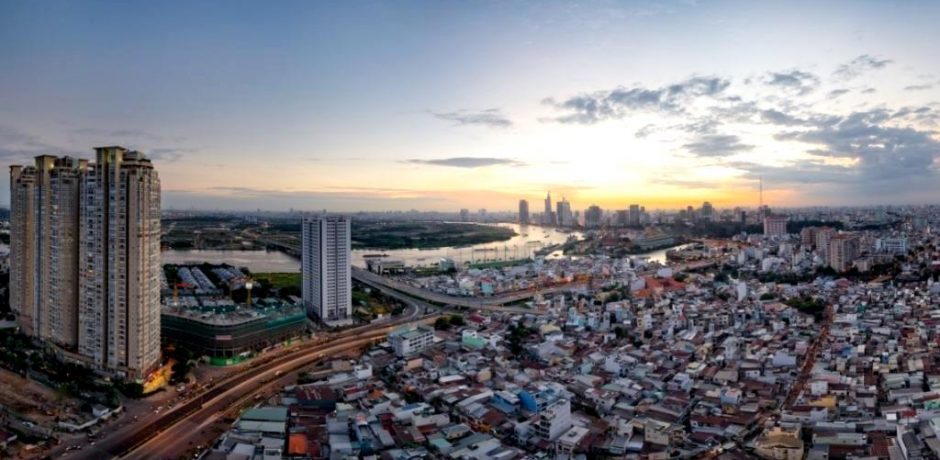
Perdite nella rete idrica di una città in forte espansione. Se il milione e mezzo di motocicli che ogni giorno si riversano nelle strade della città di Ho Chi Minh si mettessero tutte in fila una dietro l’altra, coprirebbero una distanza equivalente ad appena un decimo della rete di distribuzione idrica locale, che serve oltre otto milioni di residenti e si estende per circa 33.000 kilometri.
In appena 50 anni, la città di Ho Chi Minh si è trasformata da economia semplice basata sulla pesca alla città più grande e cuore economico del Vietnam. Negli anni ‘60 solo il 5% della popolazione vietnamita viveva nelle città, mentre oggi la cifra è salita al 33% in quanto le persone sono attratte dalle migliori condizioni di vita e dalle opportunità di lavoro.
Questa tendenza vede i confini della città di Ho Chi Minh espandersi del 4% ogni anno.
Una crescita di questa portata apporta ricchezza all’intero paese, ma allo stesso tempo mina le infrastrutture urbane, come la rete idrica, facendole diventare ben presto troppo vecchie. La città di Ho Chi Minh City ha perso quasi il 30% dell’acqua pulita nel 2016 a causa di perdite e rotture nelle tubature. Molte parti dell’infrastruttura di distribuzione idrica sono vecchie. Alcuni tratti erano stati realizzati oltre 30 anni fa, mentre altri risalgono ancora all’epoca coloniale.
L’anno scorso sono andati persi oltre 177 milioni di metri cubi d’acqua. Per fare un confronto, la maggior parte delle città sviluppate registrano una perdita idrica del 5-7%.
Al passo con la crescita
Per restare al passo con il ritmo rapido di urbanizzazione e raggiungere l’obiettivo di ridurre le perdite idriche ad appena un 10% entro il 2020, la utility locale Saigon Water Corporation (SAWACO) si è recentemente impegnata in un rinnovamento sostanziale della rete di distribuzione idrica cittadina. L’espansione della portata attuale della rete, l’integrazione delle sezioni più isolate, la riduzione delle perdite e il controllo e monitoraggio in tempo reale delle condizioni della rete per prevenire interruzioni gravi, rientrano tutti nell’ambito del progetto.
Per raggiungere questo obiettivo complesso è stato scelto il sistema strategico ABB AbilityTM Symphony® Plus SCADA. Il sistema di ABB integra un sistema sofisticato di rilevamento e gestione delle perdite della società TaKaDu, in parte proprietà di ABB. Il progetto farà affidamento su numerosi punti di raccolta dati, come sensori e contatori per il monitoraggio del flusso e della pressione, nella rete idrica per consentire a SAWACO di effettuare il monitoraggio digitale delle condizioni della rete “quasi in tempo reale”.
L’utility sarà in grado di rilevare, analizzare e gestire continuamente gli eventi della rete, trasformando le informazioni in azioni immediate per ridurre le perdite.
ABB AbilityTM Symphony® Plus è un sistema di controllo distribuito (DCS) studiato appositamente per i settori energetico e idrico. Parte del portafoglio di offerte digitali di ABB AbilityTM, questo sistema di controllo aggiunge valore per i clienti raccogliendo in modo accurato e analizzando i dati, offrendo suggerimenti utili per la gestione degli impianti basati sui dati ingegneristici nei propri sistemi, consentendo loro in ultima analisi di ridurre il rischio di progetto, i costi e i tempi di rendimento, e migliorare le prestazioni e la redditività delle attività.
Lo scopo di fornitura di ABB per questo progetto di importanza critica comprende la strumentazione e i sensori di campo, componenti fondamentali per la trasmissione di dati di alta qualità al sistema di controllo.
“Progetti come quello della rete idrica della città di Ho Chi Minh mostrano tutto il potenziale dell’automazione avanzata per tutti le realtà urbane che devono fare i conti con espansioni rapide o infrastrutture datate,” commenta Kevin Kosisko, responsabile dell’unità di Power Generation & Water di ABB. “Inoltre, la raccolta intelligente di dati digitali sul campo offrirà visibilità in tempo reale sullo stato della rete, permettendo così di incrementare i ricavi”.
Un risultato molto proficuo
Grazie alla digitalizzazione della propria rete, alla conoscenza in tempo reale delle condizioni della rete e al rilevamento preciso delle perdite, SAWACO sarà in grado di aumentare la quantità di acqua distribuita alle abitazioni e alle industrie. Sarà quindi possibile ridurre al minimo la quantità stimata di 500.000 (17,5 piedi cubi) metri cubi di acqua non fatturata, all’incirca la capacità giornaliera di uno stabilimento idrico di medie dimensioni nella città.
Dal suo lancio nel 2011, ABB AbilityTM Symphony® Plus opera in più di 6.800 nuovi impianti, oltre alle migliaia di installazioni che hanno optato per l’aggiornamento a questo DCS. Symphony Plus è il DCS scelto per altri progetti in Vietnam, come la messa in servizio originale e successiva estensione della centrale elettrica di estrema importanza Vinh Tan 4, ubicata a 250 kilometri a est della città di Ho Chi Minh. A completamento del progetto, il complesso fornirà alla rete nazionale vietnamita 5.600 megawatt di elettricità oltre a quelli attuali.
Progetto e tecnologia made in Genova
Il progetto di digitalizzazione della rete di distribuzione idrica di Ho Chi Minh city è il frutto del lavoro congiunto delle unità di Power Generation & Water italiana, con sede a Genova, e di quella vietnamita.
Anche il cuore del sistema, ABB Ability Symphony Plus è nasce dal lavoro dei tre centri di Ricerca & Sviluppo dell’unità Power Generation & Water di Genova, di Wickliffe (US) e di Mannheim (DE).
La sede di Genova ospita inoltre il ABB Ability Symphony Plus demo training center e remote control center, in cui clienti e personale ABB possono conoscere le ultime novità sul sistema, seguire corsi e provarlo con mano nell’esatta replica di una sofisticata sala di controllo.
ABB (ABBN: SIX Swiss Ex) è un leader tecnologico all’avanguardia nei prodotti per l’elettrificazione, nella robotica e nel controllo di movimento, nell’automazione industriale e nelle reti elettriche al servizio dei clienti nelle utility, nell’industria, nei trasporti e nelle infrastrutture a livello globale. Continuando una storia di innovazione lunga più di 125 anni, oggi ABB sta scrivendo il futuro della digitalizzazione industriale e guidando la quarta rivoluzione industriale ed energetica. ABB opera in oltre 100 paesi con circa 132.000 dipendenti.
www.abb.com
Tech Cities 1.0 top 25. Washington, DC has emerged as the promising tech city center after San Jose (Silicon Valley) and San Francisco, according to Cushman & Wakefield’s inaugural “Tech Cities 1.0” national report launched today.
A dominating hub for life sciences and government, Washington, DC also serves as a significant outpost for tech companies seeking proximity to policymakers as well as for burgeoning cyber-security investment.
The top 25 tech cities were determined by analyzing the concentration of factors such as talent, capital, and growth opportunity – the key ingredients that comprise a tech stew. The heartiest of these tech epicenters are: 1. San Jose, CA (Silicon Valley); 2. San Francisco, CA; 3. Washington, DC; 4. Boston/Cambridge, MA; and 5. Raleigh/Durham/Chapel Hill, NC.
Cushman & Wakefield created the “Tech Cities 1.0” report to provide greater insight for its clients and industry stakeholders into existing and emerging tech centers that are driving much of today’s U.S. economy.
Ken McCarthy, Cushman & Wakefield’s New York-based Principal Economist and Applied Research Lead for the U.S., states that “tech is in everything” and that people would be left behind if they did not adopt technology and change with that technology.
“Basically every company today is a tech company in one way or another. We’re all using it, we’re using various aspects of tech companies to do various things,” Mr. McCarthy elaborated. “Whether it’s Salesforce as customer relationship management, or Workday for HR, and various other database programs, the old way of doing business just doesn’t work anymore.”
Report co-author and Regional Director, Northwest U.S. Research at Cushman & Wakefield, in San Francisco, Robert Sammons, said that while it was not surprising to see San Jose (Silicon Valley) and San Francisco continue to dominate, that mass-transit issues and escalating housing costs in those areas have fanned a tech spillover into secondary markets such as Austin (no. 7), Denver (no. 8), San Diego (no. 9), and Salt Lake City (no. 24).
Remarking on Seattle’s number six ranking, Mr. Sammons said, “It’s certainly one of the biggest, if not the biggest competitor to Silicon Valley and San Francisco. Seattle is an interesting case because it was driven by Microsoft early on, which endures, and now Amazon is huge in the downtown area and it continues to be significant.”
He pointed to tech titan Google, which continues to spread its wings outside of Silicon Valley, for opening operations in Seattle to entice the existing talent pool.
Mr. Sammons cited Seattle’s cost-of-living as a lingering issue, somewhat mitigated by a recent uptick in residential development that’s outpacing San Francisco’s, as well as mass transit challenges.
“Seattle has played catchup over the past few years but with housing creation now outpacing that of the Bay Area and with a huge $54 billion transportation initiative that recently passed at the ballot box, it will likely allow it to compete much more aggressively with those markets at the very top of the list.”
To many startup and tech community workers around the world, it may be surprising to see New York (no. 15) and Los Angeles (no. 18) so far down the list.
“In the case of New York, when we started to see a growth in tech employment here about four or five years ago, one of the big issues for the companies coming to New York, particularly from San Francisco or Silicon Valley, was a lack of the skilled labor force they needed, particularly engineers,” Mr. McCarthy said.
“Now what we’re seeing in response to the growth in the TAMI sector has been an increase in investment by local universities in engineering and tech schools. All the local universities recognizing the need have begun to invest in these areas of education, and as a result you’re getting more of a tech-savvy, talented workforce. These things tend to feed on themselves, and I would expect that if we did this ranking three or four years from now, it might look a little different for New York.”
In terms of Los Angeles, both Mr. McCarthy and Mr. Sammons noted its exceptionally diverse economy.
“Media is important, and you can’t lose sight of the fact that historically it’s also been an important manufacturing and industrial center,” Mr. McCarthy said, “There are myriad industries centered in LA, which has a good talent pool, and I would expect that also will come into play as we start to see these things evolve.”
“Los Angeles is a market that’s just enormous, it’s sprawling. And tech, even though it gets a lot of press for LA and Southern California, kind of gets lost in the mix because of media and entertainment. With Snap and other tech companies centered along “Silicon Beach” and with media and entertainment becoming even more tech-oriented, LA has nowhere to go but up,” Mr. Sammons said.
Cushman & Wakefield is a leading global real estate services firm that helps clients transform the way people work, shop, and live. Our 45,000 employees in more than 70 countries help occupiers and investors optimize the value of their real estate by combining our global perspective and deep local knowledge with an impressive platform of real estate solutions. Cushman & Wakefield is among the largest commercial real estate services firms with revenue of $6 billion across core services of agency leasing, asset services, capital markets, facility services (C&W Services), global occupier services, investment & asset management (DTZ Investors), project & development services, tenant representation, and valuation & advisory. 2017 marks the 100-year anniversary of the Cushman & Wakefield brand. 100 years of taking our clients’ ideas and putting them into action.
Concrete definition of a Smart Building to be placed at the heart of EU policymaking as negotiations heat up. The Buildings Performance Institute Europe (BPIE) today puts the finishing touches on its comprehensive work on smart buildings, providing a working definition of a ‘smart building’ and making detailed policy recommendations to encourage their growth. The current negotiations on the Clean Energy for All Europeans package are a final opportunity to shape the European building stock of 2030.
This latest intervention comes at a crucial point in support of those pushing for more ambitious policy and a genuinely smart European building stock of the 2030s.
BPIE has further explored the concept of smart buildings with one question in mind: What is a smart building? Measuring how smart a building is, depends on the capacity of its functions and the degree to which different components interact and complement each other. BPIE considered all these aspects and has come forward with a concrete definition of a smart building, placing energy efficiency at its heart.
For smart buildings to become a success story, multiple benefits must be recognised on an equal footing. Buildings have the potential to be at the forefront of providing flexibility for the energy system, including through energy production, control, storage and demand response, as well as providing a means to integrate electric vehicles. Just as importantly, smart buildings must enable a healthy and comfortable living and working environment for their occupants. But analysis has shown that more must be done in this area.
BPIE is clear that both market and legislative frameworks need to allow buildings to connect to and interact with the energy system. But this is not always the case across Europe. In fact, the legislative framework is one of the biggest barriers to the widespread penetration of smart buildings. And current policy discussions lack ambition to encourage buildings to play their role as micro energy-hubs.
The BPIE policy paper recommends ways that the Energy Performance of Buildings Directive, the Energy Efficiency Directive, the Renewable Energy Directive and the Electricity Directive should be strengthened to ensure buildings can take up a leading role in the energy transition, at the same time as ensuring high building performance, dynamic operability between components of a building and its occupants and responsiveness of buildings to interact with the energy system around them. These components must be embedded in the criteria for judging whether a building truly is a Smart Building.
BPIE definition of a smart building (2017)
A smart building is highly energy efficient and covers its very low energy demand to a large extent by on-site or district-system-driven renewable energy sources.
A smart building (i) stabilises and drives a faster decarbonisation of the energy system through energy storage and demand-side flexibility;
(ii) empowers its users and occupants with control over the energy flows;
(iii) recognises and reacts to users’ and occupants’ needs in terms of comfort, health, indoor air quality, safety as well as operational requirements.
– BPIE study on “Is Europe ready for the smart buildings revolution?” (2017) finds that that no Member State is fully prepared to take advantage of the benefits that smart building technologies will entail.
– BPIE study on “Smart buildings in a decarbonised energy system” (2016), sets out 10 principles making the case for buildings to be at the core of a decarbonised energy system, producing, storing and supplying energy, making the energy system more flexible, resilient and efficient.
About BPIE
The Buildings Performance Institute Europe (BPIE) is a European not-for-profit think-tank with a focus on independent analysis and knowledge dissemination, supporting evidence-based policy making in the field of energy performance in buildings. It delivers policy analysis, policy advice and implementation support.