
Category: Operations
Rigid polyolefins in EU recycling targets: increased quality collection and sorting a must to reach the key measures to advance recycling. New study (1) identifies key measures to advance recycling.
High-density polyethylene (HDPE) and polypropylene (PP) account for almost a third of European converters’ demand and are predominantly used in packaging applications. Out of the 16.7Mt (2) placed on the market, an estimated 6.6Mt is rigid polyolefin packaging.
With the current EU recycling capacity for HDPE and PP at 1.2Mt for post-consumer and additional 0.5Mt for pre-consumer waste, the recycling facilities can treat roughly 18% of rigid polyolefin waste. The scaling up of the EU plastics recycling capacity hinges on ensuring that the maximum of plastic waste is captured for recycling. Advancing collection and sorting were identified as key to unlock the much-needed investments in the recycling of rigid polyolefins.
‘Capturing additional tonnages and sorting out pots tubs and trays, is just one of the examples of making the change,’ said Werner Kruschitz, PRE PP/PO Working Group Chairman. Driving the uptake of recyclates, is equally important.
‘The recycled rigid polyolefins content must be widened, said Herbert Snell, PRE HDPE Working Group Chairman, he added: ‘The existing trend of fully circular uses of rigid polyolefin recyclate, where rHDPE from bottles is used in bottle production, and HDPE and PP crates can be recycled back into crates, must continue to grow’.
Making rigid polyolefins fully circular depends as well on ensuring a product is readily recyclable. This will allow to maintain the highest value of the material at its end of life but will also play into making recycling more cost-effective while meeting the requirements of even the most demanding applications. Additionally, filling the existing legislative gaps to drive the uptake of recyclates, by for example using public procurement, is yet another solution that must be fully exploited.
Rigid polyolefins stream has a potential for a greater contribution to plastic packaging recycling targets. However, to further develop recycling infrastructure and markets for this grade in Europe collaboration of the industry together with European policy-makers is critical.
(1)- HDPE & PP Market in Europe: State of Play
(2)- An estimated 2–2.5 Mt of PP is used in flexible films (including flexible packaging) and 0.7 Kt of HDPE across construction and packaging films. Additionally, textiles account for roughly 2 Mt of PP and 200 kt of HDPE.
Plastics Recyclers Europe (PRE) is an organization representing the voice of the European plastics recyclers who reprocess plastic waste into high-quality material destined for the production of new articles. Recyclers are important facilitators of the circularity of plastics and the transition towards circular economy.
Plastics recycling in Europe is a rapidly growing sector, representing €3 billion in turnover, 8.5 million tonnes of installed capacity, 600 companies and over 20,000 employees.
EU microplastic ban just got a step closer – but has major loopholes. Clean-up target impossible to meet without improvements, NGOs warn.
EU plans to stop firms adding microplastic to almost all products have major loopholes that would keep pollution flooding into the environment for nearly a decade and reward unproven biodegradable plastics, environmental groups are warning.
The European Commission has pledged to ban microplastic from cosmetics, paints, detergents, some farm, medical and other products to prevent 500,000 tonnes polluting mostly rivers and seas. The legal process moved forward on Tuesday when a detailed proposal was presented by ECHA to the Commission. The legal restriction is expected to become law next year.
But following industry lobbying, the proposal has major loopholes, according to the Rethink Plastic alliance of environmental groups. Some sectors could get up to 8 years to drop microplastic, while ‘biodegradable’ microplastic that has not been shown to degrade in the environment could escape the ban. The 500,000 tonnes target will be impossible to achieve unless the proposal is improved, they calculated.
European Environmental Bureau chemicals policy officer Elise Vitali said: “Microplastic pollution is everywhere: in our drinking water, our fields, filling the air in cities and even inside our bodies. The EU is right to build on its reputation of tackling plastic pollution with this new ban. But it must avoid being sidetracked by industry-sponsored loopholes. We want a quick and broad restriction with no green light for unproven biodegradable plastic.”
Hélène Duguy, chemicals lawyer at ClientEarth, said: “The EU promised to turn off the taps on microplastic pollution. Take sport pitches – it’s a gigantic source of microplastics pollution and it’s now up to the Commission to make sure that a full ban is in order. When it comes to cosmetics – another well-known source of this pollution – the Commission needs to reject the lenient proposal that would give the cosmetics industry a free pass to continue business as usual until 2028, even where alternatives are available.”
Microplastic pollution is irreversible and causes considerable harm to the environment, with potential grave consequences for humans. EU scientific advisors have recognised that microplastics pose an unacceptable risk, which justifies a comprehensive ban.
The groups are urging the Commission to adopt a broad restriction that covers all microplastics in all sectors and uses.
The proposal is now in the hands of the Commission’s industry department, which has not always shown ambition on chemicals policy, the NGOs said. The Commission has until late May 2021 to draft the restriction text, which will then go to a vote of member state experts. The European Parliament and Council of Ministers then have three months to object, but rarely do.
Rethink Plastic, part of the Break Free From Plastic movement, is an alliance of leading European NGOs working towards ambitious EU policies on plastics. It brings together the Center for International Environmental Law, ClientEarth, Environmental Investigation Agency , European Environmental Bureau , European Environmental Citizen’s Organisation for Standardisation, Greenpeace, Seas At Risk, Surfrider Foundation Europe, and Zero Waste Europe.
Together they represent thousands of active groups, supporters and citizens in every EU Member State working towards a future free from plastic pollution.
Accordo con ADACI per efficienza nelle aziende socie. Sono iniziati gli interventi di SmartEfficiency per migliorare l’Efficienza Energetica nelle aziende i cui manager, soci di ADACI – Associazione Italiana Acquisti & Supply Management, si avvalgono del Progetto “VIRGILIO ADACI”, lanciato nel 2020 allo scopo di erogare servizi sempre più innovativi a beneficio dei propri associati.
(altro…)

To reduce over-consumption. European Parliament demands EU targets to reduce over-consumption. MEPs confirm push for targets to curb over-consumption and decouple economic growth from resource use – an unprecedented move that could help Europe transition to a more resilient and less wasteful economy.
MEPs are looking to further accelerate Europe’s push against the throwaway economy, following a key plenary vote in the European Parliament.
Amongst other amendments, lawmakers called for the introduction of two legally binding targets to significantly reduce the EU’s material and consumption footprints by 2030. The targets would help curb Europe’s consumption and material footprints, bringing consumption and production patterns within planetary boundaries by 2050.
The vote confirms the position of the Parliament’s environment committee, which introduced the amendments two weeks ago. The European Commission will now have to take into consideration the demands of MEPs with a view to updating its Circular Economy Action Plan put forward last year.
Hailed as one of the pillars of the European Green Deal, the Commission’s proposal for the action plan was already praised for supporting sustainability and durability in the design of textiles, electronics, packaging, batteries, and other products.
MEPs also called for the absolute decoupling of economic growth from resource use, questioning the Commission’s arguments for green growth as a strategy for sustainability.
The Parliament’s stance significantly improves this strategy, according to Stephane Arditi, Director of Policy Integration and Circular Economy at the European Environmental Bureau (EEB). He said: “Legally binding targets for material use and consumption patterns are badly needed. They were the main missing piece of the puzzle in the European Commission’s proposal. If approved by the Commission and member states without delays, the targets can play a central role in Europe’s green recovery, helping citizens, businesses and governments save valuable and limited resources.”
Despite being the very first legally binding targets addressing over-consumption at EU level, the Netherlands and Finland have already adopted similar measures.
Other notable amendments approved by the environment committee push for:
– An ambitious policy making sustainable products placed on the EU market the norm and the affordable choice. In this regard, MEPs support the development of a product passport;
– Measures aimed at putting an end to planned obsolescence in everyday products.
– A more limited role for chemical recycling, which is to be assessed based on its environmental impact;
– Binding targets to reduce and cap the generation of waste, and to prevent waste. The Parliament also wants an additional target to boost the preparation of products for reuse;
– Measures aimed at reducing waste incineration and landfilling. These include a 10% landfill target to be set on a baseline year and kg of waste per person a year in order to prevent diversion from landfilling to waste incineration;
– The need to reinforce the EU Ecolabel as a benchmark for environmental sustainability
The European Environmental Bureau (EEB) is Europe’s largest network of environmental citizens’ organisations, standing for environmental justice, sustainable development and participatory democracy. Our experts work on climate change, biodiversity, circular economy, air, water, soil, chemical pollution, as well as policies on industry, energy, agriculture, product design and waste prevention. We are also active on overarching issues as sustainable development, good governance, participatory democracy and the rule of law in Europe and beyond.
330+ firms to reduce emissions by a quarter in five years since Paris Agreement. Analysis of 338 companies shows companies with ambitious science-based targets (SBTs) are delivering on Paris-aligned ambition, with emissions reductions at scale
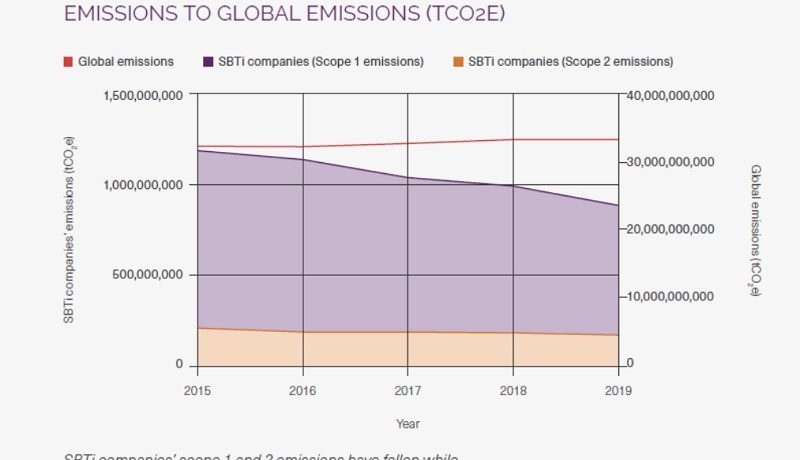
As global leaders gather for the UN’s Climate Adaptation Summit on climate resilience, new data published by the Science Based Targets initiative (SBTi) shows that companies with science-based targets are delivering on large-scale emissions reductions. Target-setting companies have successfully reduced their emissions by 25% since 2015, a difference of 302 million tonnes of CO2 equivalent, the same as the annual emissions from 78 coal-fired power plants.
Five years on from the Paris Agreement, the SBTi analysed the emissions of a group of 338 companies whose climate targets have been approved by the SBTi as aligned with climate science and the goals of the Paris Agreement. This is the first ever study to look at how setting science-based targets correlates with corporate emissions reductions and the extent to which companies are actually delivering on those targets (338 companies out of 478 total SBTi companies with targets – SMEs using the streamlined route were excluded – are included in this analysis. Companies that were missing any emissions data between 2015-2019 were excluded. Emissions data was derived from public and private disclosures through CDP, as well as public sources such as sustainability reports. In all cases, emissions data was reported by companies. The reported emissions reductions may be due to any number of factors including concerted emissions reduction efforts, changes in activity levels or types, and changes in business structure).
SBTi finds that the typical company with SBTs actually slashed direct (scope 1 and 2) emissions at a linear annual rate (6.4%) that exceeds the rate required under the SBTi’s criteria to meet 1.5°C-aligned warming scenarios (4.2%). This shows companies with SBTs are taking climate action at rates that not only meet, but are faster than, the pace of action required by the Paris Agreement. These figures compare to an average increase of around 0.85% per year in global emissions for energy and industrial processes over the same period (see Fig.1 graph below).
New research from the SBTi suggests that the planned emissions savings of companies with science-based targets are also set to generate US$25.9 billion of new investment into climate mitigation initiatives in the next decade.
Alexander Farsan, Global Lead on Science Based Targets at WWF, one of the SBTi partners said: “Today’s findings are a mark of progress at the beginning of a critical year for climate action. It shows that companies setting science-based targets are backing these commitments up with action – delivering the emissions reductions we know are vital if we want to meet the goals of the Paris Agreement. SBTi companies have cut their emissions by a quarter over the last five years – and we need more companies to follow in their footsteps. With COP26 on the horizon, now is the time for the private sector to step up to the plate and follow the science. If a company is genuine about protecting the climate, then it should be setting science-based targets.”
The research also shows that, despite the challenges of COVID-19, 2020 was a milestone year for corporate climate commitments. Over 1,000 companies, making up 20% of global market capitalization, have now set, or committed to set, a science-based target. Companies that joined the SBTi in 2020 included Amazon, Facebook and Ford. The SBTi’s analysis finds that the rate of adoption of science-based targets doubled in 2020 versus the period 2015-2019, with over 370 companies joining the SBTi in 2020[5] at an average rate of 31 per month in 2020.
Additionally, more companies are now setting targets aligned with limiting global warming to 1.5°C than, for instance, a 2°C pathway or other type of target: 41% of all companies with science based targets have 1.5°C-aligned scope 1 and 2 targets.
Progress has been particularly strong in developed economies: in 16 OECD countries, a critical mass of 20% of high-emitting companies setting science-based targets has now been reached. In 2020, this 20% threshold was also reached in six new sectors, including the high-emitting and hard to abate cement and concrete sector. However, there is huge potential to further scale up ambition and improve progress in high-emitting sectors such as construction and automotives.
The global picture also shows commitments are lagging in some regions. In Europe, a critical mass of corporates with Paris-aligned climate commitments has been reached: 34% of all companies with the greatest climate impact have committed to, or set, SBTs in contrast to just 16% in North America and 12% in Asia.
Lila Karbassi, Chief of Programmes at the United Nations Global Compact, one of the SBTi partners, said: “It is encouraging that, even in the midst of a global pandemic, corporate climate action soared in 2020. COVID-19 has revealed the vulnerability of our current economic model, and showed us that a coordinated global effort led by science is the only way out of such crises. We must channel these learnings into our collective response to the climate crisis. In many sectors and regions, we have reached a ‘critical mass’ of companies making meaningful commitments to reduce emissions, but this needs to be a global and sector-wide effort, supported by ambitious government policy, to truly build back better.”
Jason Tarry, Tesco UK and ROI CEO said: “Since setting our science-based goals, we’ve started our transition to 100% renewable electricity across our own operations by 2030, introduced a new fleet of electric delivery vans in London as part of plans to go fully electric by 2028, and begun the rollout of the UK’s largest retail network of electric vehicle charging points across 600 of our stores.
We’ve also become the first retailer to issue a new corporate bond that is aligned to an agreed Sustainability Performance Target (SPT) of reducing Group greenhouse gas emissions by 60% by 2025 against our 2015 baseline. It’s encouraging to see science-based target-setting correlating so strongly with emissions reductions and we hope to see more companies taking the urgent action needed to reduce environmental impact across all sectors, including food.“
Ernesto Ciorra, Chief Innovability® Officer at Enel said: “Enel’s strategy and integrated business model place sustainability and the fight against climate change at their core. Setting science-based targets supports an ambitious decarbonization roadmap, clarifying the alignment with the Paris Agreement, and promotes a global net-zero energy system, while reinforcing the message that climate action is an investment through which we can make a meaningful impact, creating true shared value at the global level. If corporate strategies do not encompass targets as serious as SBTi ones, they do not go beyond lots of talk and a badge of cinematic fame. #NoSBTiNoParty”
Kristina Kloberdanz, Chief Sustainability Office at Mastercard said: “This will be a crucial year for climate action, and we believe the private sector has a vital role to play in the transition to a zero-carbon economy. That’s why we updated our target with the SBTI and have aligned our ambition- across our whole value chain- with a 1.5C world,” said Kristina Kloberdanz, Chief Sustainability Officer, Mastercard. We are already making progress toward thi starget by fousing on key areas of business, inclusing decarbonization of our operations and supply chains, while also leveraging our tehnology and global network to make a positive impact on th environment at scale. Today’s data shows that increasingly more corporates are stepping up their role in this collaborative effort to address the climate challenge- and as an SBTI company we’re proud to be at the forefront of this change.”
About the Science Based Targets initiative
The Science Based Targets initiative mobilizes companies to set science-based targets and boost their competitive advantage in the transition to the low-carbon economy. It is a collaboration between CDP, the United Nations Global Compact, World Resources Institute (WRI) and the World Wide Fund for Nature (WWF) and one of the We Mean Business Coalition commitments. The initiative defines and promotes best practice in science-based target setting, offers resources and guidance to reduce barriers to adoption, and independently assesses and approves companies’ targets.
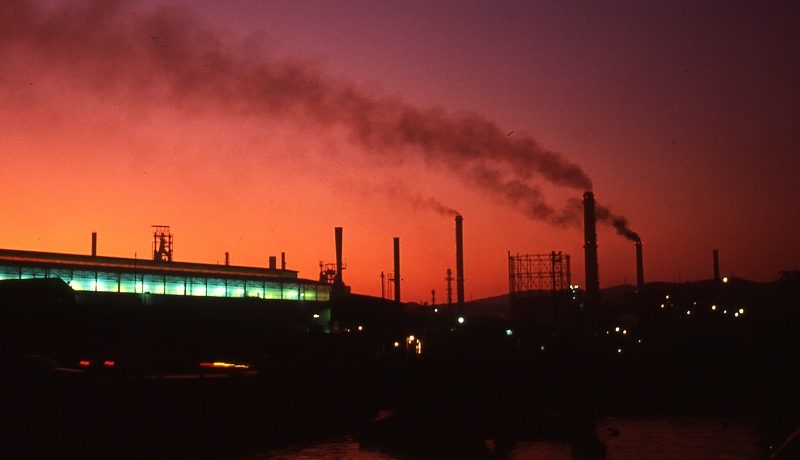
EU industrial pollution law revision essential to cut greenhouse gases and pollutants. The Industrial Emissions Directive (IED) currently excludes limits on carbon dioxide and other greenhouse gas emissions (GHGs), making it unfit to support the EU’s moves to address climate change, according to legal, environmental and health experts.
As the directive determines the allowable emissions levels of over 50,000 industrial facilities – about half of the EU’s GHG emissions – the group is launching a petition demanding the IED be revised to include GHGs and to limit air, water and soil pollution much more strictly, to ensure that the commitments under the European Green Deal become reality.
The news comes during the European Commission’s public consultation on the IED
Christian Schaible, Policy Manager for Industrial Production at the European Environmental Bureau (EEB) said: “The whole point of the IED is to protect us and our environment from the negative impacts of industrial activities. If the Commission is serious about their zero pollution, circular and carbon neutrality goals, they must redesign its scope, rethink how standards are set, and ensure greater transparency.”
Doreen Fedrigo, Industrial Transformation Policy Coordinator at CAN Europe, said: “EU leaders last year agreed to more ambitious greenhouse gas emission reductions by 2030. Now is the time to implement this higher climate goal, across all sectors. The IED is a key tool to drive drastic cuts in greenhouse gas and toxic emissions in the industry sector. Including limits on greenhouse gas emissions alongside stricter limits on other industrial emissions will be needed for the EU to honour its commitments under the Paris Climate Agreement.”
The NGOs also stress that the IED does not currently address a variety of serious problems related to the air, water and soil pollution. Large-scale industrial activities are one of the main contributors to air pollution, which leads to 412,000 premature deaths in Europe every year, meaning a stricter regulation on all industrial emissions can no longer be avoided.
Vlatka Matkovic, Senior Health and Energy Officer at the Health and Environment Alliance (HEAL) said: “Zero pollution and a health-protective approach need to be at the heart of the industrial emissions law, to urgently and significantly cut pollution, especially from coal power plants. The revision of the Industrial Emissions Directive is a not-to-be-missed opportunity for preventing disease and premature deaths, and for delivering on the EU’s climate ambition.”
The current IED does not lead to a zero pollution environment or circular economy, nor does it ensure proper public participation rights and access to information. The NGOs point out various cases of these failures throughout the EU Member States.
Laura Otýpková, lawyer from Frank Bold said: “The current IED is full of loopholes and flexibilities which allow industrial operators to avoid complying with strict rules. At the same time, the public is often excluded from proper participation and denied access to information on emissions. In the end, the IED seems like a token gesture – its revision is a perfect opportunity to make it the powerful piece of legislation it could be.”
The NGOs have launched a petition to urge the European Commission to transform the Industrial Emission Directive (IED).
The Industrial Emissions Directive came into force in January 2011 and was transposed in the EU Member States by January 2013.
It regulates dangerous pollutants from industry, including dust, nitrogen oxides, sulphur dioxide and heavy metals. Industry – which includes factories, power plants, intensive livestock farming and refineries – is the source of about a half of the European Union’s greenhouse gas emissions and 75% of hazardous waste production. Large-scale industrial activities are one of the main contributors to air pollution which leads to 412,000 premature deaths in Europe every year. At the same time, according to industry reports, these facilities release about 4,600 tonnes of heavy metals every year into the air, water and soil, including ecotoxic arsenic and neurotoxic lead and mercury. Their main source is coal combustion.
In a recent evaluation, the European Commission concluded that the IED is not working on several levels. Most importantly, the law is not helping to decarbonize industry. What we see in several countries is that the IED has allowed multiple flexibilities and has not lowered emissions, especially from coal plants, as fast as it could have. The fitness check showed that the IED has rarely helped tackle transboundary pollution and has not enabled sufficient public participation or access to information. This means that industrial operators are being allowed to pollute at dangerous levels while people at home and abroad remain powerless to do anything about it.
The European Commission has started preparing an update to the Directive, which should include new rules for industrial pollution. The public can now have their say to influence the future legislation, and secure the protection of climate and health. The consultation will be open for anyone to participate until 23 March. The European Commission should prepare the final proposal by the end of 2021, and it will then be voted on by the European Parliament.
The European Environmental Bureau (EEB) is Europe’s largest network of environmental citizens’ organisations, standing for environmental justice, sustainable development and participatory democracy. Our experts work on climate change, biodiversity, circular economy, air, water, soil, chemical pollution, as well as policies on industry, energy, agriculture, product design and waste prevention. We are also active on overarching issues as sustainable development, good governance, participatory democracy and the rule of law in Europe and beyond.
We have over 160 members in over 35 countries.
ph. © Enrico Rainero
Monitoraggio consumi elettrici Leader Price Italia. SMARTEFFICIENCY per MONITORAGGIO. L’azienda è oggi interamente italiana di proprietà di CRAI, gruppo cooperativo con una società centrale, Crai Secom, e diversi cedi distributivi con esclusività di zona. La conoscenza approfondita del territorio ha permesso di sviluppare una rete di punti vendita di varie dimensioni per soddisfare al meglio il consumatore.
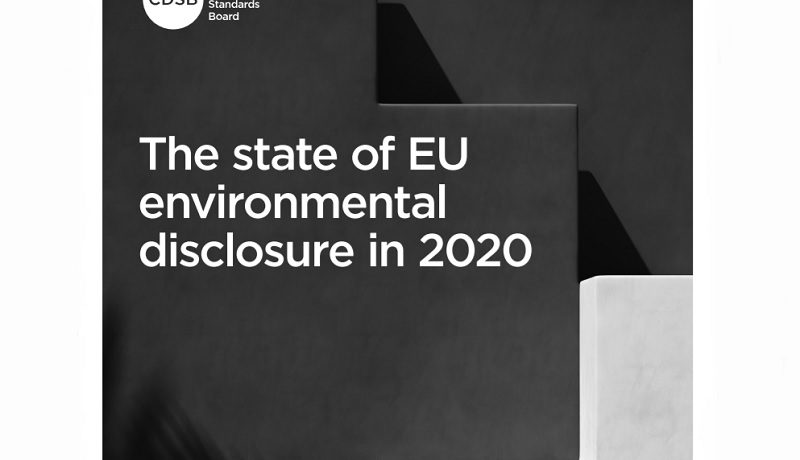
Corporate Environmental Disclosures. CDSB calls for regulatory change following review of European Corporate Environmental Disclosures. The third consecutive review of environmental and climate-related disclosures in Europe shows signs of improvement, but the information remains insufficient for investment decision-making.
Latest report released by the Climate Disclosure Standards Board “The state of EU environmental disclosures in 2020” analysed the strength and weaknesses of disclosure among 50 largest companies in the European Union with a combined market capitalisation of US$3.5 trillion under the EU Non-Financial Reporting Directive (NFRD).
Companies reviewed showed progress in the completeness and quality of greenhouse gas emissions and business model disclosures, however the top strengths and weaknesses remain unchanged.
CDSB’s report concludes that investors’ ability to integrate information disclosed under the EU’s rules into their decision-making is inherently limited without further improvements to the Non-Financial Reporting Directive on TCFD, risk and materiality.
Top strengths:
– Policies and due diligence – All companies disclosed environmental policies, but 30% did not clarify board and management level due diligence;
– Business model – 52% fully disclose the environmental aspects of their business model; and
– Key performance indicators – All companies provided GHG emissions disclosures, but only 10% disclosed metrics on biodiversity.
Top weaknesses:
– TCFD – 68% referenced the recommendations of the Task Force on Climate-related Financial Disclosures, but only 18% adequately disclosed their resilience to different climate scenarios;
– Principal Risks – 74% considered both physical and transition risks, but just 4% clearly disclosed risks over different time horizons; and
– Materiality – 38% (2019: 8%) applied a double materiality perspective, but this did not necessarily improve the quality of disclosures.
In her keynote address at the launch event, EU Commissioner Mairead McGuinness said: “The rules of the game must be transformed to fully integrate sustainability at every step of the financial value chain, and that’s why the Commission has prepared the Renewed Sustainable Finance Strategy for early next year. One of the priorities of the renewed strategy will be to strengthen the foundation for sustainable investment and the review of the Non-Financial Reporting Directive is crucial.” “Our ultimate aim,” she added, “is to put financial and the so-called non-financial information on the same footing.”
Mardi McBrien, CDSB Managing Director, said: “To achieve the goals of the Paris Agreement, it is essential for investors to receive comparable and consistent information that is needed to inform their capital allocation. The sustainability reporting landscape is moving towards harmonisation and common standards. The work of the European Commission is important in achieving this goal and we will continue working closely with Europe to develop leading approaches and internationally to develop a global baseline that works for all.”
The Climate Disclosure Standards Board (CDSB) was founded in 2007 and is an international consortium of business and environmental NGOs committed to advancing and aligning the global mainstream corporate reporting model to equate natural capital with financial capital. It does so by offering companies a framework for reporting environmental and climate information with the same rigour as financial information.
In turn, this helps them to provide investors with decision-useful environmental and climate information via the mainstream corporate report, enhancing the efficient allocation of capital.
Regulators also benefit from compliance-ready materials. Collectively, we aim to contribute to more sustainable economic, social, and environmental system.
CDSB also hosts the TCFD Knowledge Hub on behalf of the Task Force on Climate-related Financial Disclosures.
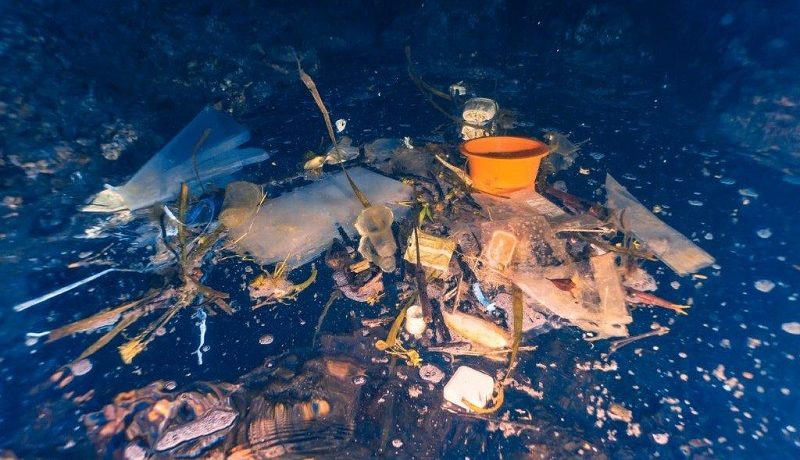
Futuro nostro e della plastica. L’Unione Europea, con la Direttiva UE 2019/904 del Parlamento Europeo, ha messo a punto una disposizione per risolvere concretamente un problema che non può più aspettare. Una rivoluzione che impatterà positivamente nel tempo sull’ambiente ma che dovrà essere sostenuta da comportamenti più responsabili da parte di tutti.
L’obiettivo che si è data l’Unione Europea, vietando l’utilizzo delle stoviglie in plastica monouso, è rivolto a salvaguardare il nostro presente e il nostro futuro. Raggiungere i risultati prefissati sarebbe già un enorme successo in quanto significherebbe diminuire i costi derivanti da danni ambientali di 22 miliardi di euro entro il 2030, un risparmio per i consumatori di 6,6 miliardi e un taglio delle emissioni di CO2 equivalente di 3,4 milioni di tonnellate.
L’obiettivo del legislatore europeo con questa disposizione è limitare l’inquinamento dei mari provocato in larga parte dai materiali plastici che, decomponendosi molto lentamente, resistono nel tempo, continuando ad essere presenti, non solo nelle acque ma anche nelle viscere dei pesci, finendo purtroppo anche nella catena alimentare.
Se si osserva al microscopio l’acqua del Mar Mediterraneo si noterà come i rifiuti presenti sono per il 95% costituiti da materie plastiche. Da alcuni dati raccolti dal WWF è stato rilevato che, essendo un bacino chiuso, l’80% dei rifiuti di plastica torna verso riva con il risultato che per ogni chilometro di litorale, si accumulano 5 kg di plastica ogni giorno.
Prima di degradarsi fino al raggiugere lo stato di microplastiche, altresì dannosissime per gli ecosistemi, un filtro di sigaretta rimane per circa 5 anni nel mare, una busta per 20 anni, un bicchiere di plastica per 50 anni e un filo da pesca per oltre 600 anni.
“Questi dati rendono evidente l’urgenza di agire sia sull’origine del problema, riducendo e sostituendo ove possibile con materiali compostabili le materie plastiche impiegate nei prodotti monouso, e ancor di più sul proseguimento di politiche virtuose di riciclo a livello globale, peraltro ben consolidate in Italia in relazione alla gestione del fine vita degli imballaggi in plastica.” dichiara Riccardo Arena, Senior Consultant di TÜV Italia che così prosegue. “Una corretta raccolta differenziata, intanto, può aiutare a ridurre l’inquinamento che ogni giorno vediamo ovunque: dai marciapiedi delle nostre città, ai parchi, alle spiagge e, purtroppo, nei nostri mari e fiumi”.
La Direttiva plastiche monouso (SUP) ha messo al bando posate e piatti di plastica, cannucce, bastoncini cotonati, sacchetti di plastica oxodegradabili e contenitori per alimenti in polistirolo espanso. Inoltre, questa recente disposizione europea ha imposto anche che entro il 2025 si dovrà riciclare almeno il 77% delle bottiglie in plastica per arrivare al 90% nel 2029.
Ha disposto, inoltre, che dal 2024 il tappo dovrà essere attaccato alla bottiglia affinché non venga disperso, oltre a imporre un aumento del contenuto minimo di materiale riciclato, che nel 2030 dovrà arrivare al 30%.
“Sicuramente la disposizione promossa dal Parlamento Europeo non risolve il problema che è globale, ma rappresenta un primo doveroso passo, anche culturale, per sensibilizzare i milioni di cittadini europei al problema e alla necessità di cambiare abitudini privilegiando consumi e prodotti più ecocompatibili”, aggiunge l’ing. Arena “Oggi sempre più persone sono consapevoli che è necessario fare qualcosa di concreto per salvaguardare il nostro futuro”.
A seguito di questa messa al bando, il mercato si è mosso, e tra i primi lo ha fatto la Grande Distribuzione organizzata (GDO) del nostro paese, dove nei suoi punti vendita fanno acquisti oltre 60 milioni di persone alla settimana e le cui imprese si sono impegnate ad eliminare del tutto dai loro scaffali le stoviglie in plastica monouso prima dell’entrata in vigore della legge.
Oltre agli impegni della GDO ci dovranno essere quelli delle istituzioni, delle imprese del settore e dei consumatori che dovranno indirizzarsi verso atteggiamenti ed abitudini sempre più sostenibili nei confronti dell’ambiente.
TÜV SÜD è un ente indipendente di certificazione, ispezione, testing, collaudi e formazione, che offre servizi certificativi in ambito qualità, energia, ambiente, sicurezza e prodotto. Fondato nel 1866, oggi con sede a Monaco di Baviera. Il gruppo negli anni è cresciuto, arrivando oggi ad essere presente con circa 1000 sedi in più di 50 nazioni. Opera con un team di oltre 24.000 dipendenti riconosciuti come specialisti nei propri campi di attività. L’obiettivo di TÜV SÜD è quello di supportare i clienti con una vasta gamma di servizi in tutto il mondo per aumentare l’efficienza, ridurre i costi e gestire il rischio.
TÜV Italia fa parte del gruppo TÜV SÜD ed è presente in Italia dal 1987. TÜV Italia ha una struttura di oltre 600 dipendenti e 400 collaboratori, con diversi uffici operativi sul territorio nazionale, a cui si affiancano i laboratori di Scarmagno (TO) e quelli delle società Bytest, a Volpiano (TO) e Benevento, e pH a Tavarnelle Val di Pesa (FI), acquisite rispettivamente nel gennaio 2012 e nel gennaio 2013.
TÜV Italia organizza periodicamente webinar e seminari gratuiti, dove vengono affrontati I temi tecnici più attuali, altre ai numerosi corsi formativi professionali, dedicati ad approfondire e sviluppare competenze in tutti i settori in cui l’ente opera.

Investire in decarbonizzazione dell’economia favorirà il rilancio dalla crisi generata dall’attuale pandemia e contribuirà a uno sviluppo socioeconomico di lungo periodo: la finanza sostenibile può ricoprire una funzione cruciale in questo processo attraverso l’integrazione del “fattore clima” nelle politiche d’investimento.
Il nuovo manuale del Forum per la Finanza Sostenibile individua 4 azioni prioritarie per gli investitori e 6 settori strategici d’intervento, anche in una dimensione di partnership pubblico-privato.
La pubblicazione è stata realizzata a partire dai contributi raccolti in un gruppo di lavoro organizzato in collaborazione con WWF e con il supporto di BPER Banca, Etica Sgr, Natixis Investment Managers e UBS Asset Management.
La presentazione del manuale si è svolta in occasione dell’evento conclusivo della nona edizione della Settimana SRI, che ha coinvolto circa 5.000 persone in 13 eventi online organizzati dal Forum (complessivamente, il calendario della Settimana SRI comprende 17 convegni e 2 eventi culturali).
Investimenti sostenibili per il clima: i contenuti
Il punto di partenza: l’attuale crisi legata alla pandemia di COVID-19 non deve oscurare il problema del cambiamento climatico
L’obiettivo di contenere l’aumento delle temperature medie globali entro 1,5° non può passare in secondo piano rispetto all’uscita dalla crisi generata dalla pandemia di COVID-19 per due motivi. Anzitutto perché gli aspetti sanitari e ambientali sono strettamente connessi: l’alterazione degli ecosistemi aumenta i rischi per la salute umana e, viceversa, la tutela della biodiversità e il contrasto al riscaldamento globale comportano ripercussioni positive anche dal punto di vista sanitario. In secondo luogo, perché investire sul clima può creare opportunità di rilancio dell’economia. Occorre quindi allineare i portafogli agli obiettivi di decarbonizzazione e investire in soluzioni di mitigazione e di adattamento al cambiamento climatico. Come?
4 azioni strategiche e 6 settori prioritari
Il manuale esamina 4 azioni che gli investitori possono integrare nelle politiche d’investimento per tenere conto dei temi ambientali e climatici:
1) analizzare i rischi finanziari legati al clima;
2) migliorare la trasparenza sui temi di sostenibilità – essenziale è quindi la rendicontazione delle imprese e la disponibilità di dati ESG per gli investitori;
3) ridurre gli impatti ambientali negativi dei portafogli – attraverso la combinazione di engagement, esclusioni, disinvestimenti e riallocazioni;
4) investire in soluzioni di mitigazione e di adattamento.
Per la quarta azione, il manuale esamina 6 settori strategici, anche per interventi in partnership pubblico-privato:
1) energia;
2) agricoltura e foreste;
3) trasporto e mobilità;
4) città ed edilizia;
5) digitale;
6) economia circolare.
L’interconnessione tra dimensione ambientale e sociale del cambiamento climatico
Uno degli aspetti peculiari del manuale è l’analisi dei fenomeni sociali legati al cambiamento climatico e la loro rilevanza dal punto di vista finanziario, in termini sia di rischi (per esempio danni alla salute, aumento delle disuguaglianze e migrazioni involontarie), sia di opportunità (in chiave di giusta transizione e di maggiore resilienza di imprese e società umane).
Il convegno di presentazione
Gian Franco Giannini Guazzugli e Francesco Bicciato, rispettivamente Presidente e Segretario Generale del Forum per la Finanza Sostenibile, hanno aperto il convegno.
“Nell’evento di oggi, che conclude la nona edizione della Settimana SRI, trattiamo la stretta connessione tra azione per il clima e rilancio dell’economia. Il manuale “Investimenti sostenibili per il clima”, realizzato a partire dai contributi di un Gruppo di Lavoro che ha coinvolto i Soci del Forum, evidenzia il valore aggiunto della natura multistakeholder della nostra associazione”, ha sottolineato Giannini Guazzugli.
“L’emergenza climatica e quella sanitaria sono profondamente legate: gli strumenti di finanza sostenibile focalizzati sulla decarbonizzazione possono essere efficaci anche in ottica di ripresa dell’economia, inclusione sociale, salvaguardia del capitale naturale e tutela della salute. Questo è il presupposto per le otto proposte che abbiamo inviato al Governo sull’impiego di strumenti di finanza sostenibile per il rilancio dell’economia”, ha dichiarato Bicciato.
Arianna Lovera, Senior Programme Officer del Forum, ha illustrato i contenuti del manuale.
La mattinata è proseguita con una tavola rotonda moderata da Emanuele Bompan, Direttore Responsabile della rivista Materia Rinnovabile, con la partecipazione di: Ugo Biggeri, Presidente di Etica Sgr; Barbara Galliano, Deputy Country Head, Head of Retail Distribution di Natixis Investment Managers Italia; Eugenio Garavini, Vice Direttore Generale di BPER Banca; Matteo Leonardi, Energy Advisor di WWF e Valeria Piani, Strategic Engagement Lead di UBS Asset Management.
Ugo Biggeri ha dichiarato: “Etica Sgr conferma la sua attenzione alle tematiche socio-ambientali e il suo impegno per una finanza sostenibile nel suo ventesimo anno di vita. Con un pizzico di orgoglio possiamo affermare di essere stati tra i primi protagonisti in Italia e di aver agito sempre con coerenza. Oggi siamo sempre più convinti che occorre crescere ancora, rafforzando l’efficacia del proprio impegno per il clima: con prodotti, certo, ma anche numeri, dati e rendicontazioni. Sostenere la transizione verso un’economia a basse emissioni di carbonio significa prendersi cura del futuro del nostro Pianeta. Questo è il nostro lavoro e il nostro impegno”.
“Per riuscire ad affrontare sfide ambientali, indissolubilmente legate a quelle sociali, come il cambiamento climatico e il degrado del territorio, della biodiversità, delle risorse idriche e marine, sarà indispensabile una combinazione tra investimenti pubblici e privati. La finanza sostenibile deve fare la differenza per essere parte integrante della soluzione. Dimostrare chiarezza seppur nella diversità degli approcci ESG, impegno attivo e convinzione, risultati e impatto: questo significa per Natixis IM essere un gestore responsabile”, ha detto Galliano.
“Emerge nuovamente come le Banche svolgano un ruolo determinante nell’evoluzione della società: è ciò che sta avvenendo nella transizione delle imprese e delle famiglie verso un’economia a basso impatto ambientale – ha dichiarato Garavini – BPER Banca, da sempre legata ai territori, ha intrapreso un percorso che l’ha portata a individuare le linee guida strategiche dello sviluppo dei processi aziendali e delle politiche creditizie e di investimento in chiave di sostenibilità. Per i mercati finanziari, questo termine è sinonimo di miglior gestione del rischio e di capacità di creare valore nel medio-lungo periodo: business e sostenibilità sono due facce della stessa medaglia”.
Leonardi ha affermato: “L’innovazione è l’elemento indispensabile per la crescita economica di oggi. Ancora di più per affrontare la ripresa post COVID. Gli investimenti in settori non compatibili con la decarbonizzazione non sono un’opzione percorribile. La politica deve riconoscere la decarbonizzazione come un’opportunità, tracciare una strategia coerente e solida nel tempo e innescare l’effetto moltiplicativo degli investimenti privati. L’innovazione implica una dimensione di rischio, per gestire il quale lo Stato deve mettersi in gioco con le risorse del Green Deal e di Next Generation EU, e altrettanto di opportunità, senza le quali non si cresce e non si potrà mettere mano alle disuguaglianze generate dalla crisi”.
Piani ha commentato: “Le conseguenze del cambiamento climatico non possono più essere ignorate. Sono necessari ingenti capitali per passare a un’economia a ridotte emissioni di carbonio e limitare il riscaldamento globale sotto i 2°C. Oltre ai benefici per il pianeta, l’impegno a contrastare il cambiamento climatico offre importanti opportunità di investimento e la possibilità di potenziare i rendimenti futuri in diverse asset class e regioni e su vari orizzonti temporali. In questa ottica, UBS AM ha creato la metodologia interna “Climate Aware” per sviluppare prodotti di investimento attivi e passivi che siano allineati con scenari di transizione verso una economia più pulita. Accompagniamo inoltre i nostri investimenti con un dialogo continuo con il management aziendale per accelerare il cambiamento”.
È seguita una relazione sull’azione per il clima di Stefano Caserini, Docente di Mitigazione dei Cambiamenti Climatici al Politecnico di Milano, che ha commentato: “Le recenti dichiarazioni del Primo Ministro cinese, la svolta negli Stati Uniti e l’European Green Deal mostrano che la transizione fuori dal sistema dei combustibili fossili è iniziata, ma deve essere accelerata enormemente se si vuole rispettare l’obiettivo dell’Accordo di Parigi. E i dati della scienza del clima confermano sempre più come non c’è più spazio per i rinvii e le azioni ambigue”. Il Forum per la Finanza Sostenibile
ll Forum per la Finanza Sostenibile è nato nel 2001. È un’associazione non profit multi-stakeholder: ne fanno parte operatori del mondo finanziario e altri soggetti interessati agli effetti ambientali e sociali dell’attività finanziaria. La missione del Forum è promuovere la conoscenza e la pratica dell’investimento sostenibile, con l’obiettivo di diffondere l’integrazione dei criteri ambientali, sociali e di governance (ESG) nei prodotti e nei processi finanziari. Il Forum per la Finanza Sostenibile è parte di Eurosif, l’European Sustainable Investment Forum.