
Author: enrico

Sostenibilità ancora lontana. Nel contesto storico che stiamo vivendo le parole “sostenibilità” e/o “sviluppo sostenibile” hanno acquisito una maggiore rilevanza, non solo in Italia ma in tutto il mondo. Tuttavia, ci sono ancora molti obiettivi da raggiungere. L’Italia ad esempio risulta peggiorata in 9 dei 17 obiettivi dell’Agenda 2030 per lo Sviluppo Sostenibile dell’ONU.
TÜV Italia supporta le imprese verso una transizione che porti ad un approccio più sostenibile grazie a servizi di assistenza, formazione e testing in diversi ambiti, da quello economico/finanziario a quello ambientale e sociale.
La pandemia ha reso evidenti molte lacune nella gestione dei piani di sviluppo economico e sociale: questo, aggiunto a una nuova consapevolezza dell’opinione pubblica, porta Governi, istituzioni e imprese a sentire sempre più urgente il cambiamento.
La situazione italiana è una delle più delicate.
Secondo il Rapporto 2020 dell’Alleanza italiana per lo Sviluppo Sostenibile che analizza lo stato di avanzamento del nostro Paese rispetto all’attuazione dei 17 Obiettivi dell’Agenda 2030 e illustra un quadro organico di proposte, l’Italia ha registrato un peggioramento in 9 dei 17 obiettivi di sviluppo sostenibile.
L’Italia appare lontana dai valori di riferimento in diversi fattori, dalla riduzione delle vittime di incidenti stradali al numero di giovani che non studiano e non lavorano (NEET), dalla definizione da parte delle città di piani per la gestione dei disastri naturali alla difesa della biodiversità. Per questo è impellente la necessità di un cammino verso una transizione ecologica “giusta”, per rilanciare il Paese in un’ottica di sostenibilità economica, sociale e ambientale.
“Gli sforzi per la sostenibilità sono richiesti a tutti i livelli, non solo quelli istituzionali, Anche le aziende possono e devono fare la loro parte visto che tali sforzi creano un valore condiviso per tutte le parti interessate, affrontando le questioni economiche, sociali e ambientali che si intersecano con il loro business”, dichiara Sabrina Bruschi, Business Unit Manager per i servizi customizzati. “Riconoscere il crescente interesse dei consumatori per l’approvvigionamento e i prodotti sostenibili permette anche alle aziende di ottenere una maggiore quota di mercato e sostenere l’impegno dei consumatori. Come TÜV Italia siamo al fianco delle imprese grazie a servizi di assistenza, formazione e testing in diversi ambiti dello sviluppo sostenibile, da quello economico/finanziario a quello ambientale e sociale. I nostri servizi possono supportare le aziende sia per approcci sistemici verso l’intera organizzazione che per approcci relativi all’infrastruttura e il prodotto”.
Economia circolare
L’impoverimento del pianeta, in termini ambientali e di risorse, deriva da un modello economico di tipo “lineare”: si estrae materia prima e si producono beni che, a fine vita o semplicemente quando non risultano più necessari, vengono gettati via. Ciò che occorre è uno spostamento dal modello economico lineare a un nuovo paradigma in cui, attraverso l’integrazione delle tre R (Reduce, Reuse and Recycle) si riduce drasticamente la necessità di estrarre e lavorare nuove risorse e, con esse, gli impatti ambientali correlati. Tale modello si definisce di economia circolare.
Attraverso un team interdisciplinare, TÜV Italia eroga servizi di supporto, formazione e verifica nell’ambito di progetti di economia circolare, tra cui assessment, valutazione del posizionamento aziendale, metriche di misurazione e formazione e coaching.
Finanza sostenibile, Monitoraggio e reporting ESG e di sostenibilità
La finanza gioca un ruolo essenziale a supporto di un’economia, il cui obiettivo è quello di creare sempre maggior valore da un punto di vista ambientale, sociale e di governance (ESG).
”L’attività di rendicontazione di carattere non finanziario, che prevede la redazione di bilanci di sostenibilità comprendenti informazioni relative alle tematiche ESG è diventata essenziale. La sostenibilità infatti è passata dall’essere un “nice to have” ad essere un “must to have” per attrarre investimenti e dimostrare ai propri stakeholder l’impegno nell’ambito della Corporate Social Responsibility (CSR)”, dichiara Sabrina Bruschi, Business Unit Manager per i servizi customizzati.. “TÜV Italia rappresenta un partner competente e affidabile per guidare le organizzazioni in percorsi scelti ad hoc, attraverso tutta una serie di servizi dedicati”,
Servizi di test per il settore ambientale
Per le aziende, e per chi al loro interno è coinvolto nei servizi legati alla salute, alla sicurezza e all’ambiente, è fondamentale individuare e mappare tutte le possibili emissioni chimiche o fisiche dei propri impianti, fissi o temporanei, per attuare politiche di rispetto ambientale.
In questo scenario si inseriscono i servizi di testing erogati dai Laboratori pH che possono eseguire:
– Controlli delle emissioni e dei processi industriali
– Indagini per la caratterizzazione e bonifica di siti inquinati
– Monitoraggi per il controllo dei rischi d’esposizione in ambiente di lavoro
– Monitoraggi per la misura degli impatti sull’ambiente
APRILE DELLA SOSTENIBILITÀ
Nell’ambito di queste attività, al fine di sensibilizzare e informare le imprese sui temi dello sviluppo sostenibile, TÜV Italia ha istituito l’“Aprile della Sostenibilità”, un mese dedicato a un ciclo di webinar gratuiti dedicati a vari aspetti di questa tematica.
8 aprile – Sostenibilità nella governance
15 aprile – Claim etici credibilità e trasparenza con la ISO/TS 17033
22 aprile – Economia circolare: il piano d’azione europeo nell’epoca del green deal
29 aprile – Hygiene audit e test ambientali
Fondato nel 1866 come associazione di controllo delle caldaie a vapore, il Gruppo TÜV SÜD è cresciuto diventando un’impresa globale. Opera con oltre 24.000 dipendenti dislocati in oltre 1.000 sedi in circa 50 paesi allo scopo di migliorare costantemente tecnologia, sistemi e competenze. TÜV SÜD contribuisce attivamente a rendere innovazioni tecniche come Industria 4.0, guida autonoma ed energie rinnovabili sicure e affidabili.
TÜV Italia fa parte del gruppo TÜV SÜD ed è presente in Italia dal 1987. TÜV Italia ha una struttura di oltre 600 dipendenti e 400 collaboratori, con diversi uffici operativi sul territorio nazionale, a cui si affiancano i laboratori TÜV Italia e Bytest a Volpiano (TO) e pH a Barberino Tavarnelle (FI), acquisite rispettivamente nel gennaio 2012 e nel gennaio 2013.
TÜV Italia organizza periodicamente webinar e seminari gratuiti, dove vengono affrontati I temi tecnici più attuali, altre ai numerosi corsi formativi professionali, dedicati ad approfondire e sviluppare competenze in tutti i settori in cui l’ente opera.
GSE Rapporto Statistico Rinnovabili. Pubblicato come ogni anno il Rapporto Energia da fonti rinnovabili in Italia nel quale il GSE fornisce il quadro statistico completo sulla diffusione e sugli impieghi delle fonti rinnovabili di energia (FER) in Italia.
Nel 2019 le FER sono state impiegate in maniera diffusa sia nel settore Elettrico (hanno coperto quasi il 40% della produzione lorda di energia), sia in quello Termico (20% circa), sia infine nel settore Trasporti (la relativa quota FER, monitorata ai fini del target settoriale al 2020, è pari al 9%).
La quota dei consumi energetici complessivi coperta da FER si attesta al 18,2%, al di sopra – per il sesto anno consecutivo – del target da raggiugere al 2020 fissato per l’Italia dalla Direttiva 2009/28/CE (17%).
Quest’anno il rapporto contiene anche prime stime indicative sul 2020. In particolare, si stima che i consumi finali lordi (CFL) da FER, nel 2020, si siano attestati intorno a 21,5 Mtep (-0,3 Mtep rispetto al 2019), mentre i CFL complessivi intorno a 108 Mtep (-13 Mtep circa rispetto al 2019).
Sulla base di tali stime preliminari, la quota FER sui CFL complessivi, calcolata applicando i criteri della Direttiva 28/2009/CE, si attesterebbe intorno al 20%. L’emergenza Covid-19, riducendo i consumi finali lordi complessivi in misura più che proporzionale rispetto ai consumi finali lordi da FER, ha dunque, verosimilmente, amplificato il margine di superamento del target europeo. Anche la stima della quota FER nel settore Trasporti aumenterebbe significativamente rispetto al dato 2019, fino a raggiungere il target del 10% fissato dalla Direttiva 28 per lo stesso 2020.
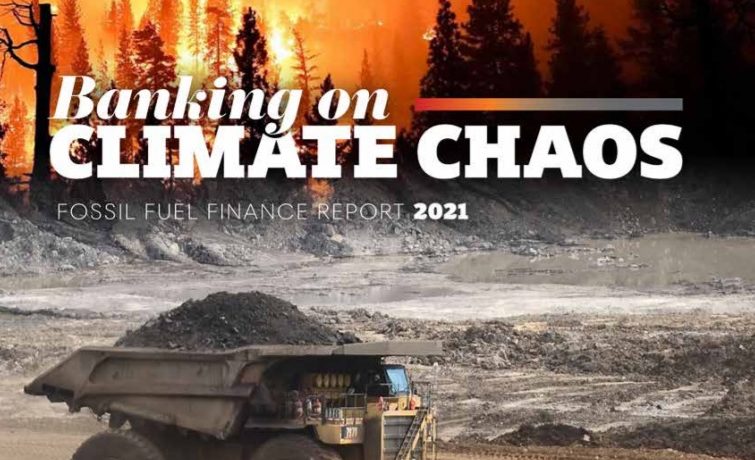
Banks still involved in fossil fuels. New Report: World’s 60 Largest Banks Have Poured $3.8 Trillion Into Fossil Fuels Since Paris Agreement; Climate Groups Sound Alarm as Financing for Fossil Fuel Expansion Continues to Rise.
Even amidst the global economic downturn, fossil fuel financing numbers were higher in 2020 than 2016
The 12th edition of the most comprehensive report on fossil fuel bank financing documents an alarming disconnect between the global scientific consensus on climate change and the continued practices of the world’s largest banks.
This year’s report, titled “Banking on Climate Chaos 2021″, expands its focus from 35 to 60 of the world’s largest banks and reveals that in the 5 years since the Paris Agreement was adopted, these banks have pumped over $3.8 trillion into the fossil fuel industry.
The report also concludes that fossil fuel financing was higher in 2020 than in 2016, a trend that stands in direct opposition to the Agreement’s stated goal of rapidly reducing carbon emissions with the aim to limit global temperature rise to 1.5° Celsius.
The report demonstrates that, even amidst a pandemic-induced recession that resulted in an across-the-board reduction of fossil fuel financing of roughly 9%, the world’s 60 largest banks still increased their financing in 2020 to the 100 companies most responsible for fossil fuel expansion by over 10%.
These banks have poured nearly $1.5 trillion over the past 5 years into 100 top companies expanding fossil fuels.
This includes companies behind highly controversial projects like the Line 3 tar sands oil pipeline and the expansion of fracking on the land of Indigenous Mapuche communities in Argentina’s Patagonia region, which are just two of the nearly 20 case studies featured in the report.
“Banking on Climate Chaos” was authored by Rainforest Action Network, BankTrack, Indigenous Environmental Network, Oil Change International, Reclaim Finance and Sierra Club, and is endorsed by over 300 organizations from 50 countries around the world.
U.S.-based banks continue to be the largest global drivers of emissions in 2020, with JPMorgan Chase remaining the world’s worst fossil bank. Chase recently committed to align its financing with the Paris Agreement and yet continues essentially unrestrained financing of fossil fuels. From 2016 through 2020, Chase’s lending and underwriting activities have provided nearly $317 billion to fossil fuels, fully 33% more than Citi, the next worst fossil bank over this period.
Wells Fargo’s total fossil financing plunged by a surprising 42% in 2020. As a result, Wells dropped from fourth-worst fossil bank in 2019, to ninth worst in 2020. This is the only time over the past five years that Wells has not been one of the worst four fossil banks.
Another surprising result from the 2020 data is that BNP Paribas (whose U.S. subsidiary is Bank of the West, which strongly advertises its supposed responsibility on climate) came in as the fourth-worst fossil bank in 2020. BNP Paribas provided $41 billion in fossil financing in 2020, a huge 41% increase over its 2019 activity. This means the biggest absolute increase in fossil financing last year came from BNP Paribas, despite the bank’s strong policy commitments restricting financing for unconventional oil and gas.
The report also examines existing climate policy commitments by banks and finds them grossly insufficient and out of alignment with the goals of the Paris Agreement across the board. Recent high profile bank policies focus either on the distant and ill-defined goal of achieving ‘net zero by 2050’ or on restricting financing for unconventional fossil fuels. In general, existing bank policies are strongest with regards to restrictions for direct project-related financing. And yet, project-related financing made up only 5% of the total fossil fuel financing analyzed in this report.
The authoring organizations behind this report are united in their demand that respect for Indigenous rights, including the right to Free, Prior, and Informed Consent, and human rights more broadly must be a non-negotiable requirement for all bank financing decisions.
This report names the largest funders of fossil fuels around the world, with JPMorgan Chase the worst overall, RBC the worst in Canada, Barclays the worst in the UK, BNP Paribas worst in the EU, MUFG worst in Japan and Bank of China worst in China.
Rainforest Action Network – Ginger Cassady, Executive Director: “The unprecedented COVID-19 dip in global financing for fossil fuels offers the world’s largest banks a stark choice point going forward; they can decide to lock in the downward trajectory of support for the primary industry driving the climate crisis or they can recklessly snap back to business as usual as the economy recovers. U.S.-based banks continue to be the worst financiers of fossil fuels by a wide margin. Going into the Glasgow climate summit at the end of the year, the stakes could not be higher. Wall Street must act now to stop financing fossil expansion and commit to fossil zero, so as to truly align its financing practices with keeping our planet from heating up more than 1.5 degrees.”
Indigenous Environmental Network – Tom Goldtooth, Executive Director: “We must understand that by bankrolling the expansion of oil and gas the top banks of the world have blood on their hands and no amount of greenwashing, carbon markets, unproven techno-fixes, or net-zero commitments can absolve their crimes against humanity and Mother Earth. Indigenous lands globally are being plundered, our inherent rights are being violated and the value of our lives has been diminished to nothing in the face of fossil fuel expansion. For the sacredness and the territorial integrity of Mother Earth, these banks must be held accountable for covering the cost of her destruction.”
Reclaim Finance – Lucie Pinson, Founder and Executive Director: “These numbers expose the hollowness of banks’ ever-multiplying commitments to be net-zero or align with the Paris Agreement climate targets. A perfect example can be found in France. Finance Minister Bruno Le Maire is fond of calling Paris the capital of green finance – but this data exposes it as 2020’s capital of climate hypocrisy, with four unscrupulous banks making France the largest backer of oil, gas and coal in Europe. BNP Paribas merits singling out as the world’s fourth-largest fossil financier in 2020, having funnelled multi-billion dollar loans to oil giants like BP and Total. Nonetheless, it’s clear that all banks need to replace empty promises with meaningful policies enacting zero tolerance for fossil fuel developers.”
Sierra Club – Ben Cushing, Financial Advocacy Campaign Manager: “Many of the world’s largest banks, including all six major U.S. banks, have made splashy commitments in recent months to zero-out the climate impact of their financing over the next 30 years. But what matters most is what they’re doing now, and the numbers don’t lie. This report separates words from actions, and the picture it paints is alarming: major banks around the world, led by U.S. banks in particular, are fueling climate chaos by dumping trillions of dollars into the fossil fuels that are causing the crisis. Big banks don’t deserve a pat on the back if their 2050 pledges are not paired with meaningful 2021 actions to cut fossil financing.”
BankTrack – Johan Frijns, Director: “As the date of the crucial Glasgow Climate Summit approaches – and god forbid the global corona crisis prevents the world from meeting to address that other, much bigger existential crisis – we witness one bank after another making solemn promises to become ‘net zero by 2050’. There exists no pathway towards this laudable goal of a generation away that does not require dealing with bank finance for the fossil fuel industry right here and now, yet too many current promises lack precisely that; a firm commitment to start severing ties with all coal, oil and gas companies that plan on continuing their climate wrecking activities in the years to come.”
Oil Change International – Lorne Stockman, Senior Research Analyst: “This report serves as a reality check for banks that think that vague ‘net-zero’ goals are enough to stop the climate crisis. Our future goes where the money flows, and in 2020 these banks have ploughed billions into locking us into further climate chaos. Banks need to be focused on reducing fossil fuel production now, rather than on a far off and insufficient goal in the distant future. The time for half-measures is over.”
Methodology note:
This report aggregates bank lending and underwriting of debt and equity issuances according to Bloomberg’s league credit methodology (which divides credit among banks leading a transaction) to companies with any reported fossil fuel activity according to Bloomberg Finance L.P. and the Global Coal Exit List. The league credit assigned to a bank for a given transaction is adjusted by an approximation of the fossil fuel intensity of the particular borrower or issuer. Draft report findings are shared with banks in advance, and they are given an opportunity to comment on financing and policy assessments.

Il cibo che mangi, l’acqua che non vedi. In occasione della Giornata Mondiale dell’Acqua il Politecnico di Torino ha presentato i risultati e gli strumenti di comunicazione sviluppati nel progetto ERC sullo studio dell’acqua virtuale.
Preservare le risorse idriche dipende dalle nostre scelte quotidiane, l’unico modo per fare la differenza è prendere decisioni informate e consapevoli.
In occasione della Giornata Mondiale dell’Acqua 2021, le ricercatrici ed i ricercatori del progetto europeo CWASI (Coping with WAter Scarcity In a globalized world) hanno affrontato il problema della globalizzazione delle risorse idriche, consumate e utilizzate per la produzione di alimenti, indagandone gli impatti sulla sicurezza alimentare e sulle risorse ambientali.
Hanno organizzato un evento online per raccontare il nesso tra acqua e cibo e presentare gli strumenti sviluppati nel contesto del piano di comunicazione WaterToFood.
Il progetto CWASI finanziato dall’ European Research Council (ERC) – durato 5 anni e da poco concluso – è stato coordinato da Francesco Laio, professore di Idrologia del Politecnico di Torino e Direttore del Dipartimento di Ingegneria dell’Ambiente, del Territorio e delle Infrastrutture (DIATI).
“Abbiamo scelto di presentare oggi i risultati del progetto CWASI perché il tema della Giornata Mondiale dell’Acqua di quest’anno è “Valuing Water” e il progetto va proprio nella direzione di dare un valore anche all’acqua “invisibile” contenuta nei beni di consumo, in particolare nei prodotti agroalimentari” spiega il professor Francesco Laio.
Il concetto di acqua virtuale, o impronta idrica, indica il totale del fabbisogno di acqua necessario alla produzione degli alimenti.
“Per dare un ordine di grandezza indicativo, si stima che il volume totale di acqua virtuale scambiato globalmente nel corso di un anno sia dell’ordine di 1750 Km3 (secondo una stima fatta per l’anno 2016), che corrisponde a circa 35 volte il volume del lago di Garda” prosegue Laio.
Il team multidisciplinare che ha lavorato alla ricerca ha coinvolto ricercatori e ricercatrici di discipline quali l’idrologia, l’economia, la teoria della complessità, le scienze nutrizionali, la geopolitica e l’agronomia – solo per menzionare le principali – e ha lasciato in eredità una notevole mole di dati e informazioni che ora si vuole rendere disponibili alla comunità, nella convinzione che l’intera società debba essere coinvolta per generare un reale cambiamento nel sistema alimentare globale in termini di protezione e gestione della risorsa idrica.
“Nell’ultimo anno abbiamo lavorato intensamente alla realizzazione di un progetto di comunicazione, chiamato Water to Food, con l’intento di elaborare nuovi strumenti che possano essere di facile utilizzo per il grande pubblico. Abbiamo realizzato interfacce web interattive, dove è possibile esplorare l’impronta idrica e i flussi di acqua virtuale di centinaia di prodotti agricoli a scala globale, dagli anni Sessanta ad oggi. Infine abbiamo tradotto la ricerca degli ultimi 5 anni in un manuale divulgativo, prodotto con l’aiuto di esperti del settore alcuni contributi video e intrapreso attività di educazione e divulgazione nelle scuole” racconta Marta Tuninetti, ricercatrice presso il DIATI.
ph. © Enrico Rainero
Quando l’elettronica cura corrente e freddo. Per rendere efficienti le macchine deputate alla refrigerazione e ridurre i consumi di energia elettrica, intervenendo sulla stessa rete, è possibile contare sugli apparati denominati SVG (Static Var Generator).
Ecco cosa sono e quali benefici offrono.
di Andrea Ballocchi – pubblicato su ZeroSottoZero
link articolo
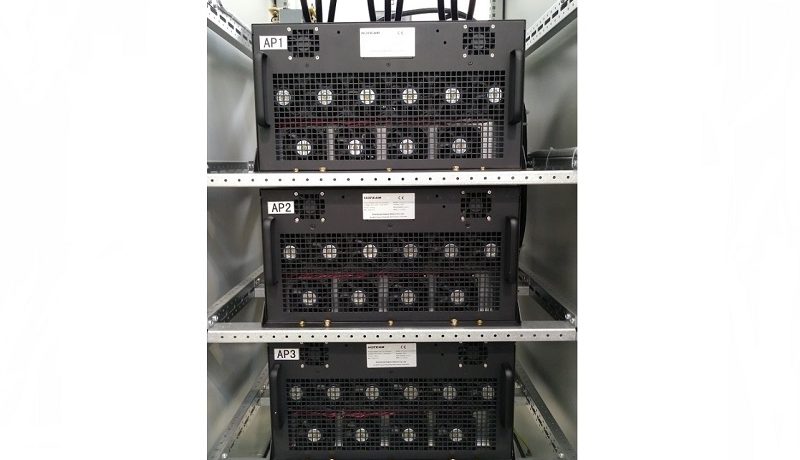
Efficienza Power Quality in Capsol. SMARTEFFICIENCY per POWER QUALITY. SmartEfficiency, dopo una serie di monitoraggi dedicati, ha verificato l’opportunità di eliminare la serie di armoniche e l’energia reattiva generate dalle apparecchiature produttive dell’azienda. Sono stati quindi forniti ed installati gli apparati SVG (Static Var Generator) e APF (Active Power Filter) direttamente sulle singole linee elettriche della produzione.
Rigid polyolefins in EU recycling targets: increased quality collection and sorting a must to reach the key measures to advance recycling. New study (1) identifies key measures to advance recycling.
High-density polyethylene (HDPE) and polypropylene (PP) account for almost a third of European converters’ demand and are predominantly used in packaging applications. Out of the 16.7Mt (2) placed on the market, an estimated 6.6Mt is rigid polyolefin packaging.
With the current EU recycling capacity for HDPE and PP at 1.2Mt for post-consumer and additional 0.5Mt for pre-consumer waste, the recycling facilities can treat roughly 18% of rigid polyolefin waste. The scaling up of the EU plastics recycling capacity hinges on ensuring that the maximum of plastic waste is captured for recycling. Advancing collection and sorting were identified as key to unlock the much-needed investments in the recycling of rigid polyolefins.
‘Capturing additional tonnages and sorting out pots tubs and trays, is just one of the examples of making the change,’ said Werner Kruschitz, PRE PP/PO Working Group Chairman. Driving the uptake of recyclates, is equally important.
‘The recycled rigid polyolefins content must be widened, said Herbert Snell, PRE HDPE Working Group Chairman, he added: ‘The existing trend of fully circular uses of rigid polyolefin recyclate, where rHDPE from bottles is used in bottle production, and HDPE and PP crates can be recycled back into crates, must continue to grow’.
Making rigid polyolefins fully circular depends as well on ensuring a product is readily recyclable. This will allow to maintain the highest value of the material at its end of life but will also play into making recycling more cost-effective while meeting the requirements of even the most demanding applications. Additionally, filling the existing legislative gaps to drive the uptake of recyclates, by for example using public procurement, is yet another solution that must be fully exploited.
Rigid polyolefins stream has a potential for a greater contribution to plastic packaging recycling targets. However, to further develop recycling infrastructure and markets for this grade in Europe collaboration of the industry together with European policy-makers is critical.
(1)- HDPE & PP Market in Europe: State of Play
(2)- An estimated 2–2.5 Mt of PP is used in flexible films (including flexible packaging) and 0.7 Kt of HDPE across construction and packaging films. Additionally, textiles account for roughly 2 Mt of PP and 200 kt of HDPE.
Plastics Recyclers Europe (PRE) is an organization representing the voice of the European plastics recyclers who reprocess plastic waste into high-quality material destined for the production of new articles. Recyclers are important facilitators of the circularity of plastics and the transition towards circular economy.
Plastics recycling in Europe is a rapidly growing sector, representing €3 billion in turnover, 8.5 million tonnes of installed capacity, 600 companies and over 20,000 employees.
Citytech mobilità terzo millennio. Citytech è l’evento B2B dedicato alla mobilità urbana più accreditato d’Italia: la manifestazione raccoglie tutte le innovazioni e le best practice del settore sia a livello nazionale che internazionale, diventando così un momento di incontro e discussione per aziende leader, startup, istituzioni, stakeholder, investitori e media.
L’edizione 2021 affronterà il delicato tema dei più grandi cambiamenti nel contesto economico e sociale dal dopoguerra a oggi, con particolare riferimento alla mobilità, che, nuovamente, si trova ad essere protagonista di un’evoluzione inattesa.
Un palcoscenico adatto ad individuare, presentare e dare ascolto a proposte innovative ed efficaci che possano guidare e plasmare il futuro della mobilità nelle città del terzo millennio.
Il programma conference affronterà tutte le tematiche più trendy del momento: mobilità urbana aerea, guida autonoma, sharing mobility, veicoli elettrici, infrastrutture di ricarica, micromobilità, connettività, big data, blockchain e soluzioni per la sosta.
Grazie collaborazione con Comune di Milano, Citytech si svolgerà il 20 e 21 maggio 2021 nella splendida cornice di Piazza Castello.
Nell’area pedonale sita nel pieno centro di Milano, le aziende potranno esporre i propri prodotti e servizi, realizzare test ride e, durante il ricco programma conference, comunicare la propria visione sul futuro della mobilità non solo alla business community ma anche alla cittadinanza.
L’intera area, sia espositiva che conference, sarà allestita completamente all’aperto. Il nuovo concept sarà ideato nel rispetto delle linee guida regionali e delle norme di distanziamento in vigore in materia di Covid.
20 e 21 maggio 2021 – Milano – Piazza Castello
– BYinnovation è Media Partner di Citytech
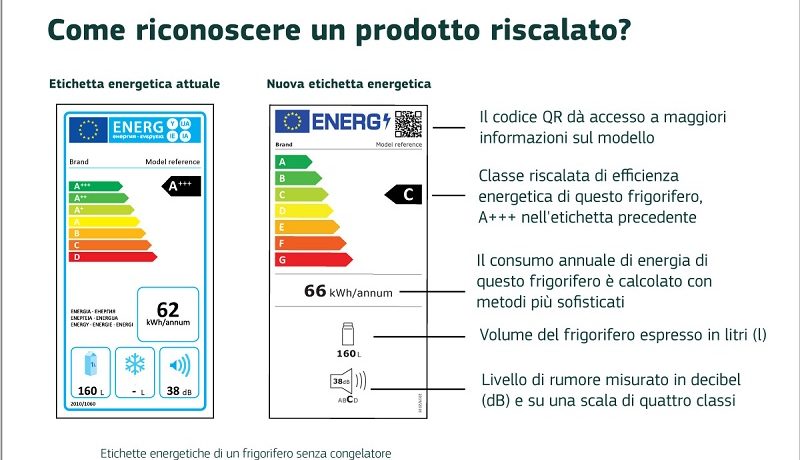
Etichette Energetiche UE. Per aiutare i consumatori dell’UE a ridurre le bollette energetiche e l’impronta di carbonio, a partire da lunedì 1 marzo 2021 è applicabile in tutti i negozi e in tutti i punti vendita online una nuova versione della famosa etichetta energetica UE.
Le nuove etichette si applicheranno inizialmente a quattro categorie di prodotti: frigoriferi e congelatori, lavastoviglie, lavatrici, televisori (e altri monitor esterni).
Il 1 settembre usciranno le nuove etichette per lampadine e lampade con sorgenti luminose fisse, altri prodotti seguiranno nei prossimi anni.
Poiché un numero sempre maggiore di prodotti ha raggiunto le classi A +, A + + o A + + + secondo la scala attuale, la modifica più importante delle nuove etichette è il ritorno alla più semplice scala A-G, più rigorosa e concepita in modo che pochissimi prodotti siano inizialmente in grado di ottenere la classificazione “A”, lasciando un buon margine all’inclusione di prodotti più efficienti in futuro. i prodotti energeticamente più efficienti presenti ora sul mercato saranno infatti, di norma, etichettati “B”, “C” o “D”. Le etichette contengono elementi nuovi, tra cui un link QR a una banca dati a livello UE che consentirà ai consumatori di trovare maggiori dettagli sul prodotto. Il 1º marzo entrerà in vigore anche una serie di norme sulla progettazione ecocompatibile, in particolare per quanto riguarda la riparabilità e l’obbligo per i fabbricanti di tenere a disposizione i pezzi di ricambio per un certo numero di anni anche dopo che i prodotti non sono più immessi sul mercato.
Kadri Simson, Commissaria per l’Energia, ha dichiarato: “L’etichetta energetica originale ha avuto un grande successo, poiché ha consentito ad una famiglia media in Europa di risparmiare varie centinaia di euro l’anno e ha motivato le imprese a investire in ricerca e sviluppo. Alla fine di febbraio oltre il 90 % dei prodotti risultano etichettati A +, A + + o A + + +. Il nuovo sistema sarà più chiaro per i consumatori e garantirà che le imprese continuino a innovare e a offrire prodotti ancora più efficienti, con conseguente riduzione delle emissioni di gas a effetto serra.”
Oltre a riscalare la classe di efficienza energetica del prodotto in esame, la nuova etichetta presenta icone più chiare e moderne. Come le precedenti, le etichette riscalate non mostrano solo la classe di efficienza energetica; per una lavatrice, ad esempio, indicano a un primo sguardo il numero di litri di acqua per ciclo, la durata di un ciclo e il consumo di energia misurato su un programma standardizzato.
Un’ulteriore significativa modifica è l’introduzione del codice QR in alto a destra: scansionandolo, i consumatori ottengono informazioni supplementari sul modello del prodotto, ad esempio sulle dimensioni, le caratteristiche specifiche o i risultati delle prove a seconda dell’apparecchio. Tutti gli apparecchi presenti sul mercato dell’UE devono essere registrati in una nuova banca dati a livello UE, il registro europeo delle etichette energetiche (European Product Registry for Energy Labels), EPREL, che faciliterà ulteriormente il confronto di prodotti simili in futuro.
Oltre alle norme sull’etichettatura energetica, il 1 marzo 2021 sono entrate in vigore i nuovi regolamenti corrispondenti sulla progettazione ecocompatibile, che aggiornano i requisiti minimi di efficienza e rafforzano dei diritti dei consumatori per quanto riguarda la riparazione dei prodotti e il sostegno all’economia circolare.
I fabbricanti o gli importatori sono ora obbligati a mettere a disposizione dei riparatori professionisti una serie di pezzi essenziali (motori e spazzole per motori, pompe, ammortizzatori e molle, cestelli di lavaggio ecc.) per almeno 7-10 anni dall’immissione sul mercato dell’UE dell’ultima unità di un modello.
Anche per gli utilizzatori finali (vale a dire i consumatori che non sono riparatori professionisti, ma che amano effettuare essi stessi le riparazioni), i fabbricanti devono mettere a disposizione alcuni pezzi di ricambio per diversi anni dopo che un prodotto è stato ritirato dal mercato — prodotti quali porte o cerniere e sigilli che sono compatibili con il “fai da te”.
Il tempo massimo di consegna per tutti questi pezzi è di 15 giorni lavorativi dall’ordine.
Contesto
L’etichetta energetica dell’UE è una caratteristica assai nota sui prodotti per uso domestico come le lampadine, i televisori o le lavatrici, e ha aiutato i consumatori a compiere scelte informate per oltre 25 anni. In un’indagine condotta a livello dell’UE (Eurobarometro) nel 2019, il 93 % dei consumatori ha confermato di aver riconosciuto l’etichetta e il 79 % di esserne stato influenzato nella decisione sul prodotto da acquistare. Insieme ai requisiti minimi di prestazione armonizzati (noti come “progettazione ecocompatibile”), si stima che le norme dell’UE sull’etichettatura energetica ridurranno la spesa dei consumatori di decine di miliardi di euro l’anno, generando nel contempo numerosi altri vantaggi per l’ambiente e per i fabbricanti e i dettaglianti.
Le nuove categorie dell’etichetta riscalata sono state concordate in seguito a un processo di consultazione rigoroso e trasparente che ha visto l’ampio coinvolgimento dei portatori di interessi e degli Stati membri in tutte le fasi, il controllo del Consiglio e del Parlamento europeo e sufficiente coinvolgimento e preavviso per i fabbricanti. Come previsto dal regolamento quadro, altri gruppi di prodotti saranno riscalati nei prossimi anni: asciugatrici, apparecchi per il riscaldamento d’ambiente locale, condizionatori d’aria, apparecchi di cottura, unità di ventilazione, armadi frigoriferi professionali, apparecchi per il riscaldamento d’ambiente, scaldacqua, caldaie a combustibile solido.
Il passaggio alle etichette riscalate coincide con l’entrata in vigore di due regolamenti orizzontali (“omnibus”) adottati di recente per rettificare o chiarire una serie di punti nei regolamenti sull’etichettatura energetica e sulla progettazione ecocompatibile originariamente adottati nel 2019.
EU microplastic ban just got a step closer – but has major loopholes. Clean-up target impossible to meet without improvements, NGOs warn.
EU plans to stop firms adding microplastic to almost all products have major loopholes that would keep pollution flooding into the environment for nearly a decade and reward unproven biodegradable plastics, environmental groups are warning.
The European Commission has pledged to ban microplastic from cosmetics, paints, detergents, some farm, medical and other products to prevent 500,000 tonnes polluting mostly rivers and seas. The legal process moved forward on Tuesday when a detailed proposal was presented by ECHA to the Commission. The legal restriction is expected to become law next year.
But following industry lobbying, the proposal has major loopholes, according to the Rethink Plastic alliance of environmental groups. Some sectors could get up to 8 years to drop microplastic, while ‘biodegradable’ microplastic that has not been shown to degrade in the environment could escape the ban. The 500,000 tonnes target will be impossible to achieve unless the proposal is improved, they calculated.
European Environmental Bureau chemicals policy officer Elise Vitali said: “Microplastic pollution is everywhere: in our drinking water, our fields, filling the air in cities and even inside our bodies. The EU is right to build on its reputation of tackling plastic pollution with this new ban. But it must avoid being sidetracked by industry-sponsored loopholes. We want a quick and broad restriction with no green light for unproven biodegradable plastic.”
Hélène Duguy, chemicals lawyer at ClientEarth, said: “The EU promised to turn off the taps on microplastic pollution. Take sport pitches – it’s a gigantic source of microplastics pollution and it’s now up to the Commission to make sure that a full ban is in order. When it comes to cosmetics – another well-known source of this pollution – the Commission needs to reject the lenient proposal that would give the cosmetics industry a free pass to continue business as usual until 2028, even where alternatives are available.”
Microplastic pollution is irreversible and causes considerable harm to the environment, with potential grave consequences for humans. EU scientific advisors have recognised that microplastics pose an unacceptable risk, which justifies a comprehensive ban.
The groups are urging the Commission to adopt a broad restriction that covers all microplastics in all sectors and uses.
The proposal is now in the hands of the Commission’s industry department, which has not always shown ambition on chemicals policy, the NGOs said. The Commission has until late May 2021 to draft the restriction text, which will then go to a vote of member state experts. The European Parliament and Council of Ministers then have three months to object, but rarely do.
Rethink Plastic, part of the Break Free From Plastic movement, is an alliance of leading European NGOs working towards ambitious EU policies on plastics. It brings together the Center for International Environmental Law, ClientEarth, Environmental Investigation Agency , European Environmental Bureau , European Environmental Citizen’s Organisation for Standardisation, Greenpeace, Seas At Risk, Surfrider Foundation Europe, and Zero Waste Europe.
Together they represent thousands of active groups, supporters and citizens in every EU Member State working towards a future free from plastic pollution.